
Commercial Back Door Repair & Replacement Toronto: Steel Rear Exit Doors (2026)
The back door of a store, restaurant or warehouse takes more abuse than any other door in the building: deliveries, garbage runs, staff breaks, weather, and the occasional break-in attempt. When it rusts, sags, won't latch or gets kicked in, we repair it or replace it with a door built for the job.
Fix Your Back Door
Tell us what the back door is doing. A photo of the door, the bottom edge and the frame helps us plan.
No obligation. We reply quickly, 24/7.
Why Back Doors Fail First
Rear doors live a harder life than the front entrance.
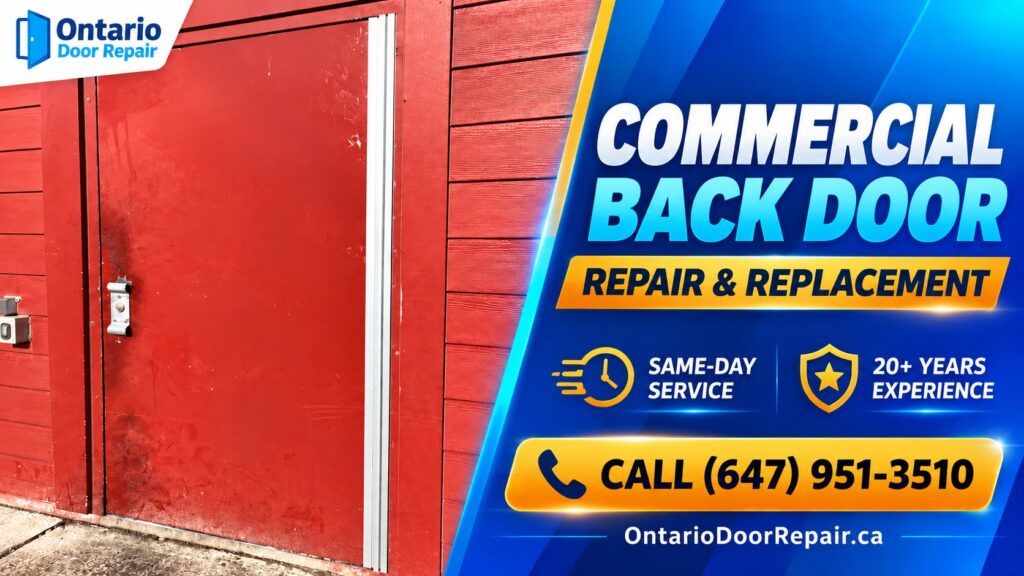
The front door of a business gets looked after because customers see it. The back door usually doesn't, until it stops working. It gets propped open with a wedge, hit with carts and dollies, left open in the rain, and used as the main route for deliveries and garbage. On most buildings it also faces a lane or loading area where snow and salt pile up against the bottom of the door all winter.
Most commercial rear doors in Toronto are hollow metal: a steel door in a steel frame, sometimes fire-rated, usually with a panic bar or lever on the inside and a closer at the top. The problems we see are consistent: rust at the bottom edge, doors that sag and drag, frames bent by forced entry, closers that leak, and exit devices that no longer latch.
A lot of these problems can be repaired. Some doors are past saving. We'll tell you which one you have after looking at the door, the frame and the hardware together.
Security first
Rear doors are where most commercial break-ins start. We fix them so they close and lock every time.
Code-aware
Exit doors and fire-rated doors have rules. Repairs keep the door compliant.
Same-day securing
A door that won't lock is secured the same day, then repaired properly.
Common Commercial Back Door Problems
What we get called for, and how it's usually fixed.
Rusted bottom edge
Salt, snow and standing water rust the bottom of steel doors and frames from the inside out.
Kicked in or pried open
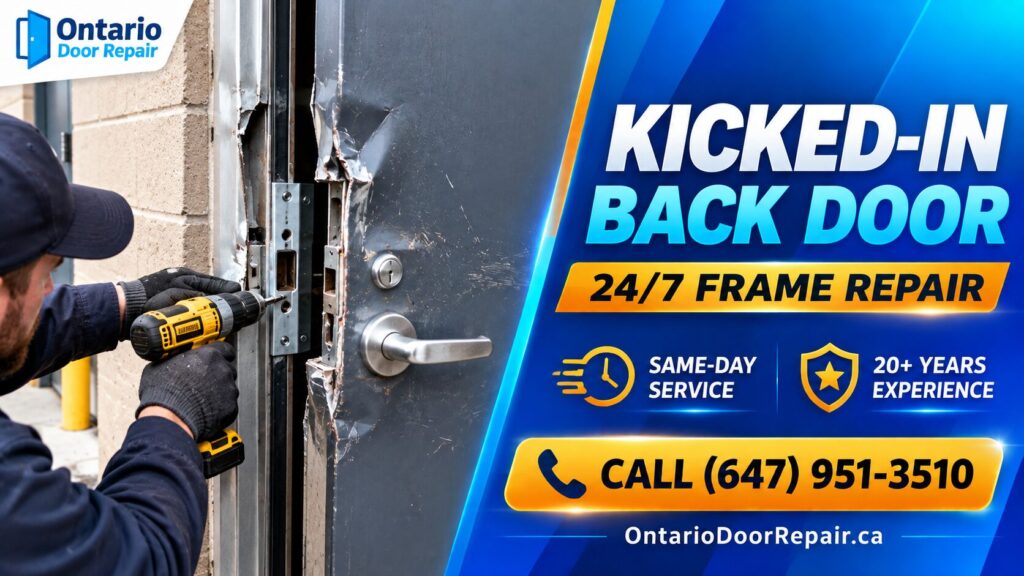
Forced entry bends the door edge, splits the frame at the strike and tears out the latch.
Door sags and drags
Worn hinges, loose hinge screws in the frame, or a heavy door on light hinges.
Won't latch or lock
The door has dropped, the strike has moved, or the exit device is worn.
Closer leaking or slamming
Seals fail, oil leaks, and the door either slams or won't close fully.
Door and frame worn out
Decades of use leave the door dented, the frame out of square and the hardware loose.
Back door won't lock tonight?
We secure commercial rear doors the same day, 24/7, across Toronto and the GTA.
Repair or Replace a Commercial Back Door?
The frame and the door skin decide.
Repair makes sense when
- The door skin is solid with only surface rust
- The frame is anchored and square
- The problem is hinges, closer or hardware
- The damage is limited to the lock area
- The door is fire-rated and the label is intact
- The door is otherwise in decent condition
Replace when
- Rust has eaten through the bottom of the door
- The door is badly bent from forced entry
- The frame is split, rotted or pulled from the wall
- The door has been patched repeatedly
- You need a higher security or insulated door
- The fire rating label is missing or the door was altered
Many rear doors can be replaced without replacing the frame. A new hollow metal slab is prepared for the existing hinge and strike positions and hung in the old frame, which keeps the job to a day and avoids wall repairs. When the frame is gone too, we replace both. See steel door repair and steel door replacement.
Security Upgrades for Rear Doors
Small changes that make a back door much harder to force.
Latch guards
Most commercial back doors open outward. That leaves the gap between the door and frame exposed to a pry bar. A steel latch guard covers the gap over the lock area so the latch can't be reached or pried.
Security hinges
On out-swinging doors the hinge pins are on the outside. Non-removable pins or hinge security studs stop someone from pulling the pins and lifting the door off.
Stronger strikes and frames
A reinforced strike and properly anchored frame spread the force of a kick or pry across the frame instead of one screw. Frames that have already been bent should be repaired or replaced, not just painted over.
Better exit hardware
A worn or cheap exit device is often the weakest point. A commercial-grade panic bar with a proper vertical rod or rim device, and a rekeyed cylinder after staff changes, closes the gap.
Door closer that actually closes
A back door that doesn't close fully on its own is an open door. Adjusting or replacing the closer is often the cheapest security upgrade on the list.
Exit Doors, Fire Doors and the Rules
Back doors are often required exits. Repairs have to keep them that way.
Many rear doors are designated exits, and some are fire-rated separations between the business and a corridor, stairwell or neighbouring unit. That affects what can be done to them. An exit door must open from the inside without a key or special knowledge, which is why panic bars and exit devices are used instead of deadbolts that need a key on the inside.
Fire-rated doors carry a label on the edge or frame showing their rating. They must close and latch on their own, and any repair or replacement must keep the rating. Adding a deadbolt, cutting in a vent, or replacing the slab with an unrated door can void it. See fire-rated door code requirements and fire door annual inspection.
When you're not sure whether your back door is an exit or fire-rated, we check the labels and hardware before recommending anything.
How We Repair or Replace Your Back Door
Step by step.
1. Inspect door and frame
Rust, bends, hinge wear, frame anchors, closer and exit hardware, and any fire label.
2. Secure if needed
If the door won't lock, we make it secure the same day. See emergency board-up.
3. Recommend
Repair, new slab in the existing frame, or a full door and frame, with the reasons.
4. Repair or install
Hinges, closers, exit devices and strikes fixed or replaced; new doors hung and adjusted.
5. Security hardware
Latch guard, security hinges and a rekeyed or new cylinder where needed.
6. Test
The door closes, latches and locks on its own every time, and opens freely from inside.
Businesses We Work For
Rear doors look similar, but every business uses them differently.
Restaurants and cafes use the back door dozens of times a day for deliveries and garbage, often with wet or greasy floors. Closers and hinges wear fast, and doors get propped open.
Retail stores and plazas have rear doors onto lanes that see little foot traffic, which makes them a target for break-ins at night.
Warehouses and industrial units have man doors next to roll-up doors that take hits from forklifts and pallets.
Offices, clinics and daycares need rear exits that work reliably and meet code, with hardware that staff can use easily.
Residential and mixed-use buildings have rear and side service doors that property managers need kept secure and closing. See commercial door maintenance contracts.
What Affects the Cost
We quote after seeing the door.
- Repair or replacement. Hinge, closer and hardware repairs cost far less than a new door.
- Door only or door and frame. Keeping the existing frame saves time and wall repairs.
- Fire rating. Rated doors and frames must be replaced with rated products.
- Hardware. Exit devices, closers, latch guards and cylinders.
- Size and finish. Non-standard sizes and custom finishes.
- Urgency. After-hours securing following a break-in.
See the commercial door repair cost guide for general numbers.
Related Commercial Door Services
Often part of the same job.
Commercial door repair
Storefronts, steel doors, closers and hinges.
Steel door repair
Rusted, dented and sagging steel doors.
Panic bars
Exit devices installed and repaired.
Door closers
Leaking, slamming and weak closers.
Hollow metal doors
Door and frame replacement.
Rekey & master key
New keys after staff changes.
Commercial Back Door FAQ
Questions business owners ask us.
Can you replace just the door and keep the steel frame?
Often, yes. If the frame is solid and anchored, a new hollow metal door can be prepared to fit the existing hinges and strike.
Our back door was kicked in overnight. Can you come today?
Yes. We secure the door the same day and then repair or replace the damaged door and frame.
Can I put a deadbolt on our rear exit door?
Not if it's a required exit that must open from inside without a key. A panic bar with a latch guard is the usual solution.
The bottom of our steel door is rusted. Can it be fixed?
Surface rust can be treated and painted. If the metal is rusted through, the door usually needs replacing.
Is our back door fire-rated?
Check the hinge edge of the door and the frame for a metal or embossed label. We can check it for you.
Why does our back door slam?
The closer is out of adjustment or leaking oil. Adjusting or replacing it fixes the slam and protects the frame.
Do you service plazas and multiple locations?
Yes. We handle rear doors for plazas, chains and property managers across the GTA.
Can I send photos for a quote?
Yes. Send photos of the door, frame and hardware to our WhatsApp at 647-866-0956.
More Guides
Related help from our team.
Related reading: commercial door alignment repair, door reinforcement after a break-in, winter-proofing commercial doors, door hardware grades, hinge pulled out of the frame and electric strike repair. Services: commercial door services, break-in repairs, storefront floor pivots and emergency door repair.
Commercial Door Repair Across the GTA
Local commercial door pages near you.
Back door fixed, locked and closing on its own
Commercial rear doors, frames and exit hardware repaired and replaced across Toronto and the GTA. Licensed, insured, 24/7.
📞 Call 647-951-3510 Request a Free Estimate