If you own or manage a commercial building in Ontario, fire-rated doors are one of the few building components where a small oversight can mean a failed fire inspection, an insurance problem, or real danger to the people inside. Yet most property managers we meet in Toronto and the GTA cannot say with confidence which of their doors are fire-rated, what rating they carry, or when they were last inspected.
This guide explains, in plain language, what the Ontario Building Code and Ontario Fire Code require of fire door assemblies in 2026: where fire-rated doors are mandatory, how ratings work, what the NFPA 80 annual inspection covers, the violations inspectors flag most often, and what compliant repairs cost in the GTA. Ontario Door Repair has supplied, installed and repaired fire and exit doors across Toronto for over 20 years — call 647-951-3510 for a code-compliant assessment.

What Counts as a Fire-Rated Door Under Ontario Code
A fire-rated door is not just a heavy door. Under the Ontario Building Code (OBC), the requirement applies to the entire fire door assembly: the door slab, the frame, the hinges, the closer, the latching hardware and any glazing — all tested together and carrying a certification label (typically ULC or WHI in Ontario). If any component is swapped for a non-rated part, the assembly as a whole is no longer compliant, even if the door slab itself still has its label.
Installation and ongoing maintenance are governed by NFPA 80 (Standard for Fire Doors and Other Opening Protectives), which both the OBC and the Ontario Fire Code lean on. That standard is why the label on the hinge edge of the door matters so much: paint over it, remove it, or plane the door down, and the door legally stops being a fire door. Our steel door repair technicians see voided labels on a weekly basis.
Where the Ontario Building Code Requires Fire Doors
Fire-rated doors are required wherever a door opening penetrates a required fire separation. In practice, for commercial and multi-residential buildings in the GTA, that means:
- Exit doors and exit stairwells — the doors protecting your escape routes, including fire exit doors with panic hardware
- Corridor doors in apartment buildings, hotels, and care occupancies
- Service rooms — electrical, mechanical, boiler rooms
- Garbage and laundry rooms in multi-unit residential buildings
- Doors between attached garages and dwellings
- Openings between different occupancies — for example between a storefront and residential units above; see our storefront entry door services
If you are unsure which doors in your building sit in fire separations, a walk-through with a qualified door contractor is the fastest answer. We do this routinely as part of commercial door repair assessments across Toronto.
Fire Door Ratings Explained: 20, 45, 60 and 90 Minutes
The rating on the label states how long the assembly resists fire in a standard test. As a rule of thumb, the door rating corresponds to the rating of the wall it sits in — commonly three quarters of the wall rating. Typical Ontario applications:
| Rating | Typical location |
|---|---|
| 20 minutes | Corridor and suite entry doors in residential buildings (smoke control closures) |
| 45 minutes | Doors in 1-hour fire separations — service rooms, many corridor walls |
| 60 minutes | Some exit enclosures and higher-hazard service rooms |
| 90 minutes | Doors in 2-hour separations — exit stairwells, garbage rooms, between-occupancy walls |
Never guess a rating when replacing a door. Matching the required rating is part of the permit and inspection trail, and an under-rated door is one of the most expensive mistakes to fix after the fact. Our door frame repair team confirms wall ratings before quoting any fire door replacement.
NFPA 80 Annual Inspection: What Gets Checked
NFPA 80 requires every fire door assembly to be inspected and tested at least once a year, with written records kept for the fire inspector. The Ontario Fire Code backs this up by requiring closures in fire separations to be maintained in operating condition. A proper annual inspection covers:
- Label present and legible on door and frame
- No open holes or breaks in the door or frame
- Glazing and glass kits intact and rated
- Door closes fully and latches positively from any open position
- Self-closing device works — no disconnected or leaking closers
- Clearances within limits (roughly 3 mm at the head and jambs, max about 19 mm at the bottom)
- No field modifications that void the listing — planing, added kick plates over allowed size, non-rated hardware
- Gasketing and smoke seals intact where required
- No blocking, wedging or propping devices
If your last inspection is more than a year old, book one before your next fire department visit — read our guide on why regular commercial door maintenance is essential.
The 7 Fire Door Violations Ontario Inspectors Flag Most
- Propped-open doors. The classic. A fire door held open with a wedge or garbage can protects nothing. Legal hold-open requires a listed magnetic hold-open tied to the fire alarm — see our magnetic locks repair and installation service.
- Painted-over or missing labels. No label, no rating — the door must be re-certified or replaced.
- Doors that do not latch. A fire door that slams but does not positively latch will blow open under fire pressure. Often a strike or closer adjustment; sometimes an electric strike repair.
- Excessive undercut or gaps from worn hinges or a sagging frame — a job for hinge replacement.
- Non-rated replacement hardware installed during a past repair.
- Field modifications — holes drilled for new locks, planed edges, oversized vision kits.
- Damaged frames from carts, forklifts or break-ins; see break-in repairs and exterior door frame repair.
Repair or Replace? Keeping the Listing Intact
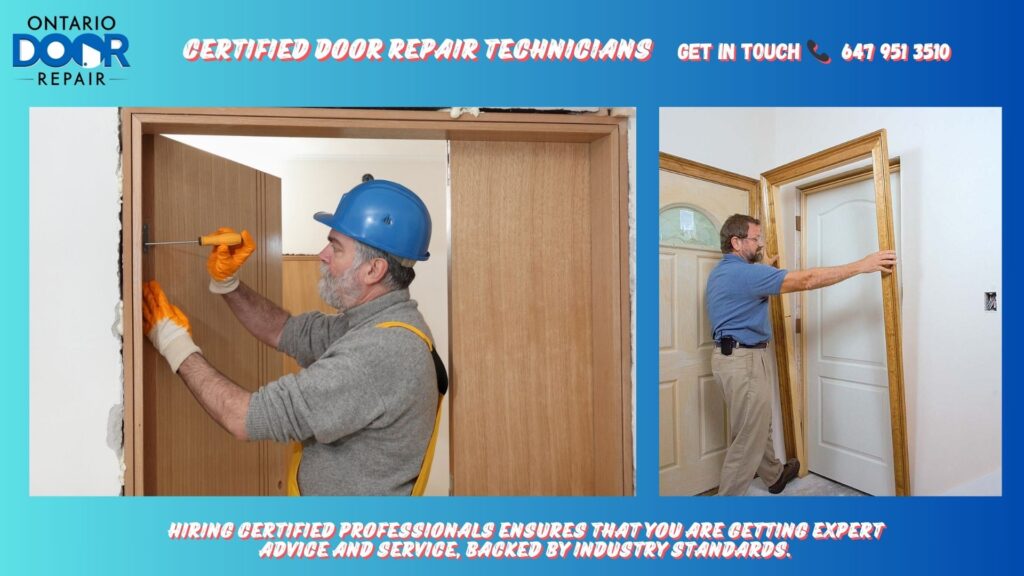
Many fire door problems are repairable without replacing the assembly: closer replacement, hinge and pivot work, latch and strike adjustment, gasketing, and approved steel patching. The rule is that every repair must use listed components and must not alter the door beyond what NFPA 80 permits. When a slab is badly damaged, has lost its label, or the wrong rating was installed originally, replacement of the full assembly is the compliant route.
This is exactly the judgment call our licensed technicians make every day on commercial doors, aluminum and glass doors and wood doors across the GTA. Not sure which way your door goes? Check our post on the top 10 signs your door needs immediate repair, or request a free estimate.
Fire Door Compliance Costs in the GTA (2026)
Typical 2026 price ranges we see in Toronto and the GTA. Every building differs — treat these as planning figures, and see our full commercial door repair cost guide for 2026:
| Service | Typical range (CAD) |
|---|---|
| Annual NFPA 80 inspection (per door) | $75 – $150 |
| Rated door closer supply + install | $250 – $600 |
| Positive-latching / strike repair | $150 – $400 |
| Smoke gasketing per door | $150 – $350 |
| Rated hinge / pivot replacement | $200 – $500 |
| New 90-min steel fire door assembly, supplied + installed | $1,800 – $4,000 |
Frequently Asked Questions
How often do fire doors need to be inspected in Ontario?
At least once a year under NFPA 80, with written records. The Ontario Fire Code also requires closures in fire separations to be maintained in operating condition at all times, so obvious defects must be fixed as soon as they are found, not at the next annual.
Can I prop a fire door open during business hours?
Not with a wedge, hook or any manual device. The only compliant hold-open is a listed electromagnetic device that releases the door when the fire alarm activates, so the door closes automatically in an emergency.
My fire door label was painted over. Is the door still compliant?
If the label is illegible, an inspector will treat the door as unrated. In some cases a field labelling service can re-certify the door; otherwise the slab needs replacement. We can assess this on site.
Can a regular contractor replace a fire door?
Only if they install a complete listed assembly with rated frame and hardware, matched to the wall rating. A beautiful new door with non-rated hinges or the wrong rating fails inspection. Use a door company that works with fire-rated assemblies daily.
Do fire door rules apply to small storefronts?
Often yes — especially where the storefront shares walls or floors with other occupancies or has a rear exit into a shared corridor. If your unit is part of a plaza or has residential units above, assume some of your doors are in fire separations until verified.
Fire Door Service Across Toronto and the GTA
We inspect, repair, supply and install fire-rated doors in Etobicoke, North York, Scarborough, Vaughan, Markham, Richmond Hill, Mississauga, Oakville and Hamilton. Emergency? Our 24/7 emergency door repair team is on call. See what our clients say or browse more answers in our FAQ.
Book a Fire Door Inspection or Repair Today
Licensed & insured · 20+ years in the GTA · Same-day service · Warranty on every job