
Lock Rekey Toronto: Rekeying & Master Key Systems for Homes and Businesses (2026)
Rekeying changes which key opens your lock without replacing the lock itself. Old keys stop working, new keys go to the people who should have them, and the hardware on your doors stays exactly where it is.
Rekey Your Locks
Tell us how many locks, the type of building, and whether you need one key for everything or different access levels.
No obligation. We reply quickly, 24/7.
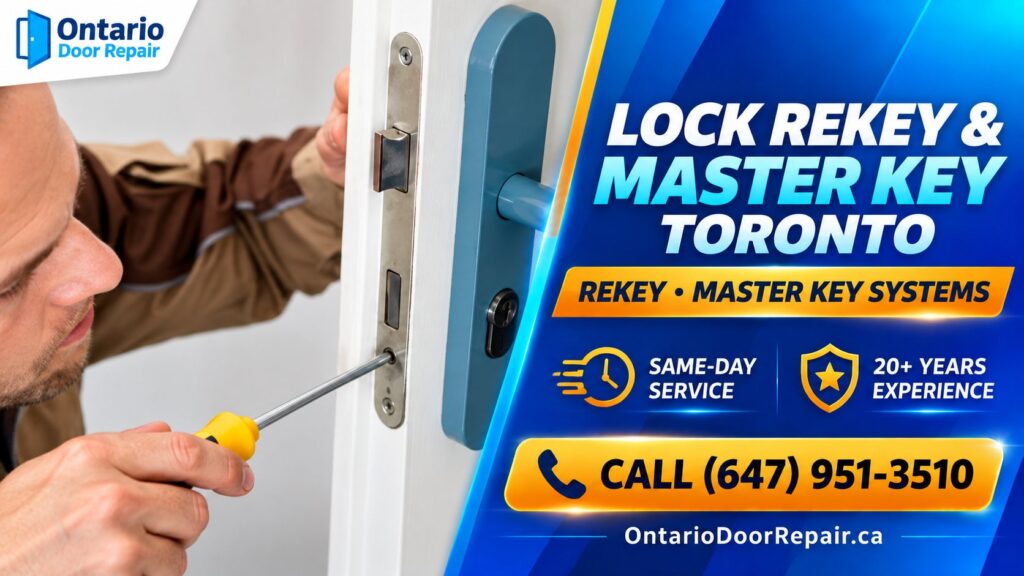
What Rekeying Actually Does
A short explanation before you decide between rekeying and replacing.
Most door locks in Toronto homes and businesses are pin tumbler locks. Inside the cylinder there is a row of small pins cut to different lengths. When the right key goes in, the pins line up at exactly the right height and the cylinder turns. When any other key goes in, they don't, and the lock stays shut.
Rekeying means taking the cylinder apart and replacing those pins with a new set cut to match a new key. The lock body, the handle, the deadbolt and the strike in the frame all stay in place. Only the combination changes. From the moment the cylinder goes back in, every old key in circulation is useless.
That is why rekeying is usually the first thing we suggest after keys go missing, after a tenant or employee leaves, or when you buy a home and have no idea how many copies of the keys are out there. The locks are fine. The problem is who can open them.
If the lock itself is worn, damaged or low quality, rekeying doesn't fix that. In those cases a full lock change or a commercial lock replacement makes more sense, and we'll tell you so when we see the hardware.
Old keys stop working
Every copy of the old key is locked out the moment the cylinder is rekeyed.
Hardware stays put
No new holes, no new handles, no damage to the door or finish.
Control who has access
Issue keys only to the people who should have them, and keep track of them.
When to Rekey Your Locks
These are the situations we get called for most often.
You just bought a home
The previous owners, their contractors, the cleaner and a neighbour may all still have keys.
A tenant moved out
Landlords rekey between tenancies so the old tenant's copies stop working.
An employee left with keys
Keys walk out the door when staff change, especially in stores and restaurants.
Keys were lost or stolen
A lost key ring with an address tag or a car key fob is a real risk.
After a break-in
Even if the lock wasn't forced, the intruder may have found or copied a key.
Too many different keys
A building with ten doors and ten keys wastes time every single day.
Keys lost or stolen?
We rekey homes, stores and offices the same day across Toronto and the GTA. Call now and we'll send a technician.
Rekey or Replace the Lock?
Rekeying is faster and keeps your hardware. Replacement is the right call when the lock itself is the problem.
Rekeying is enough when
- The locks work smoothly and the key turns easily
- The hardware is decent quality and not damaged
- You only need to stop old keys from working
- You want every door on one key
- You want to keep the existing handles and finish
- The locks are the same brand or keyway
Replace the lock when
- The key sticks, grinds or only works at an angle
- The lock was damaged or forced in a break-in
- It's a cheap lock with little security value
- You want a higher-security or restricted keyway
- You're switching to keypad or smart locks
- Commercial hardware no longer meets the door's needs
On commercial doors, a stiff or sticky key is often not the cylinder at all. It can be a door that has dropped so the latch drags on the strike, or a door closer pulling the door tight against the frame. We check the door as well as the lock, because a new key in a misaligned door still won't turn nicely.
Master Key Systems for Businesses and Buildings
One key for the owner, limited keys for everyone else.
A master key system lets different keys open different combinations of doors. The owner or property manager carries one key that opens everything. A manager's key might open the front door, the office and the stockroom. A staff key might only open the front door. Each lock is pinned so that it accepts its own change key and the master key above it.
How the levels usually work
Grand master: opens every lock in the system, usually held by the owner or building manager.
Master: opens a group of doors, such as one floor, one unit or one department.
Change key: opens a single door or a small set of doors, given to staff or tenants.
Who uses master key systems
Retail stores with front, back and office doors. Restaurants that need kitchen staff to get in but not into the office. Small office buildings, clinics, daycares, places of worship, warehouses, and residential buildings where the superintendent needs access to common areas and service rooms.
Keep the system under control
A master key system is only as good as its key control. We recommend a simple key register listing who holds which key, keys stamped "Do Not Duplicate", and, where the risk is higher, a restricted keyway so that copies can't be cut at a hardware store. When a key goes missing, only the locks on that part of the system need to be rekeyed, not the whole building.
Rekeying for Landlords, Condos and Property Managers
Turnovers, lost fobs and shared doors.
In rental properties, rekeying between tenants is the simplest way to keep the next tenant safe from anyone holding an old key. In Ontario, the Residential Tenancies Act does not allow a landlord to change or alter the locking system of a rental unit during a tenancy without giving the tenant replacement keys, and tenants can't change locks without the landlord's consent. Rekeying between tenancies, when the unit is empty, avoids both issues.
For condos and apartment buildings, we rekey suite doors, service rooms, garbage rooms and mailrooms, and set up master key systems so the superintendent can reach every common area on one key. Many suite entry doors in Toronto buildings are fire-rated, so any hardware change needs to keep the door self-closing and latching. See condo door replacement rules and fire-rated door requirements.
Buildings with fob or keypad entry still have mechanical cylinders somewhere: as override locks on the main door, on service rooms and on stairwell doors. Those need rekeying too when keys go missing. If the access control side of the door is the problem, we handle electric strikes and mag locks as well.
How We Rekey Your Locks
From the phone call to new keys in your hand.
1. Count the doors
We list every lock that needs rekeying and check whether the cylinders share a brand and keyway.
2. Check the hardware
Worn or damaged locks are flagged. There's no point rekeying a lock that is failing.
3. Plan the keying
One key for everything, or a master key chart with the access levels you need.
4. Rekey on site
Cylinders are removed, re-pinned to the new key and reinstalled. The door hardware stays in place.
5. Test every door
Each lock is tested with the new key, and the old key is tried to confirm it no longer works.
6. Hand over the keys
New keys are cut and handed over, with a simple key list for businesses and buildings.
Types of Locks We Rekey
Residential and commercial cylinders.
Residential locks
Deadbolts, knob and lever sets, handle sets on front doors, side and back door locks, garage entry doors and patio door cylinders. Many homes end up with a mix of brands over the years. Where the keyways don't match, we can often switch cylinders so one key works everywhere. Multi-point locks on European-style and patio doors usually have a replaceable cylinder that can be rekeyed or swapped.
Commercial locks
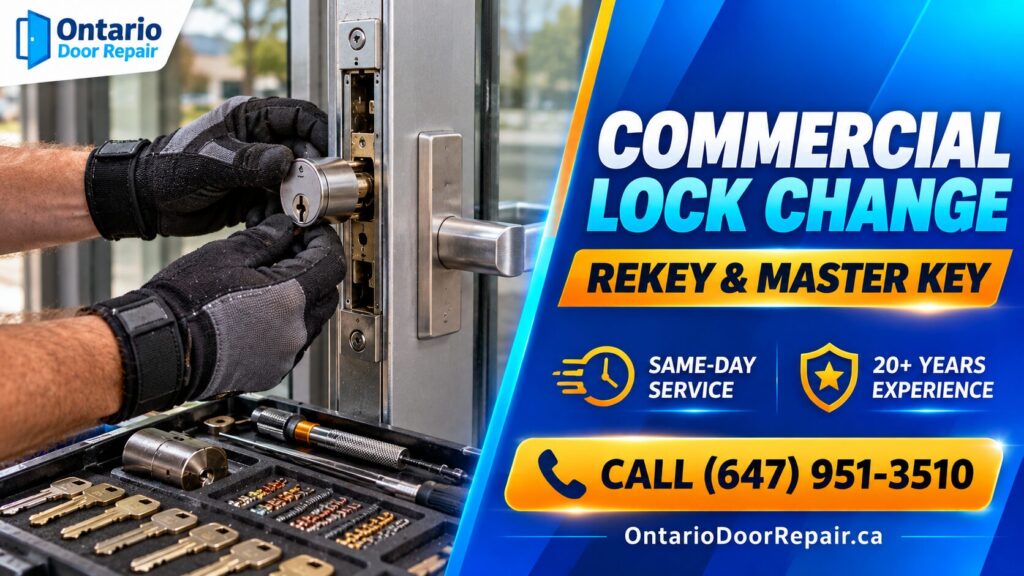
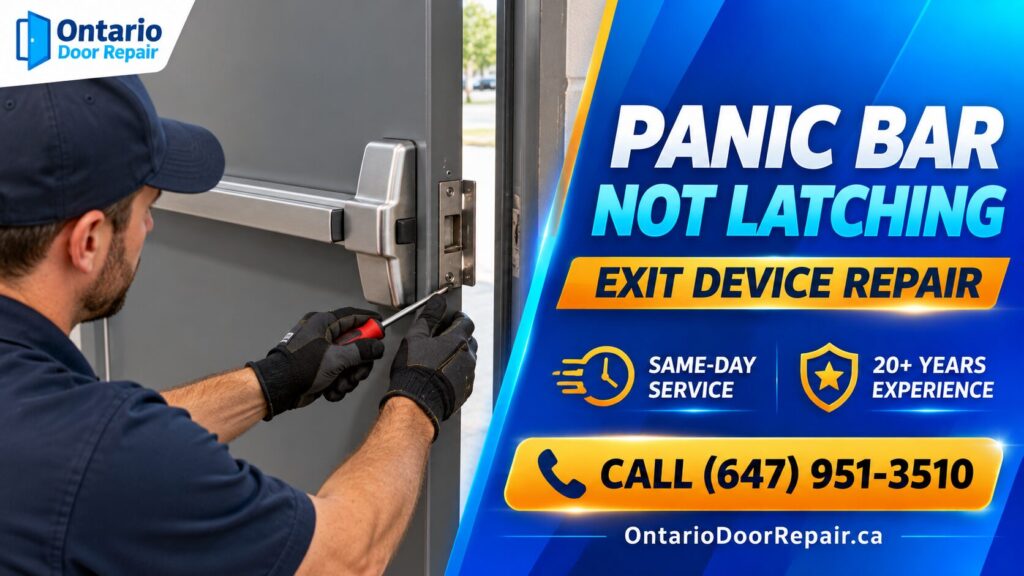
Mortise locks on office and entrance doors, rim cylinders on panic bars and exit devices, storefront deadlocks on aluminum doors, interchangeable-core cylinders, and padlocks used on gates and roll-up doors. Commercial cylinders are usually built to a higher grade, and the keying plan matters more because more people carry keys. See door hardware grades (ANSI/BHMA).
High-security and restricted keys
If you want keys that can't be copied without authorization, a restricted or patented keyway is the upgrade. The cylinder is replaced rather than rekeyed, and duplicate keys are controlled. This is common for businesses that have had problems with unauthorized copies.
Signs Your Lock Needs More Than a Rekey
Things we look for while we're at the door.
- The key is hard to turn or pull out. Worn pins, a dirty cylinder, or a door that has dropped out of line. See door won't latch.
- The deadbolt only locks if you push or lift the door. The bolt is hitting the strike. That's an alignment job, not a key job. See door won't close or lock.
- The cylinder spins or feels loose. A loose or damaged cylinder can be pulled or forced. It needs to be tightened or replaced.
- Visible damage around the lock. Pry marks, a bent latch or a split frame after a break-in. See door repair after a break-in.
- The strike or frame is loose. Short screws in a soft jamb make even a good lock easy to kick. See front door security upgrades.
- A commercial door doesn't close fully on its own. The lock can't do its job if the closer doesn't pull the door shut. See door closer repair.
What Affects the Cost of Rekeying
We quote after we know the number and type of locks.
- Number of locks. Rekeying is priced per cylinder, so a house with four locks and a building with forty are very different jobs.
- Type of cylinder. Standard residential cylinders are quicker than commercial mortise or interchangeable-core cylinders.
- Master keying. Designing and pinning a master key system takes more time than keying everything alike.
- Number of keys. How many new keys you need cut for staff, tenants or family.
- Lock condition. Worn or damaged locks may need replacing instead of rekeying.
- Timing. After-hours and emergency calls, such as lost keys late at night.
For general pricing on commercial work, see our commercial door repair cost guide. For homes, see the residential door repair cost guide.
Related Door and Lock Services
Often done in the same visit.
Lock change
New locks when rekeying isn't enough.
Commercial lock replacement
Mortise locks, deadlocks and exit device cylinders.
Smart lock installation
Keypad and Wi-Fi locks on your existing door.
Break-in repairs
Doors, frames and locks after a forced entry.
Access control doors
Strikes, mag locks and fob entry doors.
Commercial door repair
Storefronts, steel doors, closers and hinges.
Lock Rekey FAQ
Questions we get asked about rekeying.
What's the difference between rekeying and changing a lock?
Rekeying changes the pins inside the existing cylinder so a new key works and the old ones don't. Changing the lock replaces the hardware itself. Rekeying keeps your handles and finish; changing the lock is for worn, damaged or low-security hardware.
Can all my doors work with one key?
Usually, yes, if the locks share a keyway. If they don't, we can often replace one or two cylinders so everything works on a single key.
How long does rekeying take?
Most residential cylinders take a few minutes each. A whole house is usually done in one visit. Larger commercial jobs and master key systems take longer and are planned ahead.
Do I need to rekey after buying a house?
It's strongly recommended. You have no way of knowing how many copies of the old keys exist or who has them.
Can a landlord rekey a rental unit?
Between tenancies, yes. During a tenancy, Ontario's Residential Tenancies Act requires the landlord to give the tenant replacement keys if the locking system is changed. Rekeying when the unit is empty is the simplest approach.
What is a master key system?
A keying plan where each lock opens with its own key and also with a master key held by the owner or manager. It lets you give people access to only the doors they need.
Can you rekey commercial locks and panic bar cylinders?
Yes. We rekey mortise cylinders, rim cylinders on exit devices, storefront deadlocks and interchangeable cores.
Can you come the same day?
Yes. Lost or stolen keys are treated as urgent. Call 647-951-3510, available 24/7.
More Guides
Related help from our team.
Before you call, these guides may help: front door security upgrades, door hardware grades, smart locks on existing doors, condo door rules, commercial door maintenance contracts and common door problems in the GTA. Other services: panic bar installation, electric strike repair, steel door repair, residential door repair and emergency door repair.
Rekeying Across the GTA
Local lock and door pages near you.
New keys today, same locks on your doors
Rekeying and master key systems for homes, rentals, stores and offices across Toronto and the GTA. Licensed and insured, 24/7.
📞 Call 647-951-3510 Request a Free Estimate