Door Won’t Latch or Close Properly? Toronto Repair Guide (2026)
A door that won’t latch is one of those problems that starts small and stops being small fast. First you push a little harder. Then you lean on it. Then one morning it swings open on its own, or worse, it looks closed but the bolt never entered the strike plate at all. In a house that is a security gap. In a commercial building it can also be a code problem.
We get these calls every week across Toronto and the GTA. The good news is that most latching failures come down to five or six causes, and a fair number of them you can diagnose yourself in ten minutes. This guide walks through how to find the real cause, what you can fix on your own, and when it is time to call a door repair technician.
First, Find Out Whether It’s the Door, the Frame, or the Hardware
Before touching a screwdriver, do this test. Close the door slowly and watch where the latch bolt meets the strike plate.
- Bolt hits above or below the strike hole — the door has dropped or the frame has shifted. Usually hinges or frame.
- Bolt hits the face of the strike plate and won’t go in at all — the door isn’t seating deep enough. Usually a swollen door, a build-up of paint, or worn weatherstripping pushing back.
- Bolt lines up but doesn’t spring out fully — the latch mechanism itself is worn or dry.
- Door latches but rattles — the strike plate is too far out, or the stop is misplaced.
That one observation tells you which of the sections below to read. If you can’t see the gap clearly, slide a piece of paper around the perimeter of the closed door. Where it slides freely, the gap is too wide. Where it jams, the door is binding.
Cause 1: The Door Has Sagged on Its Hinges
This is the most common cause we see, especially on older doors and anything heavy. Over years of use the screws in the top hinge slowly pull out of the jamb. The top of the door drifts toward the hinge side, the bottom swings out, and the latch ends up sitting low.
How to confirm it
Look at the gap along the top edge of the door. If it’s wider at the latch side than at the hinge side, the door is sagging. Then grab the door handle and lift. If the door moves up noticeably and the latch suddenly lines up, you’ve found it.
The DIY fix
Open the door and support it. Remove one screw from the top hinge on the jamb side and replace it with a 3-inch screw that reaches past the jamb into the framing stud behind it. Do the others one at a time. Tightening those long screws pulls the whole jamb and door back into square. On a lot of residential doors, that single step solves the problem.
When to call us
If the screw holes are stripped out, if the hinges themselves are bent, or if you’re dealing with a heavy commercial door on pivot hinges or continuous hinges, don’t improvise. Commercial hinge work is a different job from a residential one, and we cover it under commercial door repair. Storefront doors have their own set of failure patterns, which we broke down in common storefront door and hinge problems.
Cause 2: Seasonal Swelling and Movement
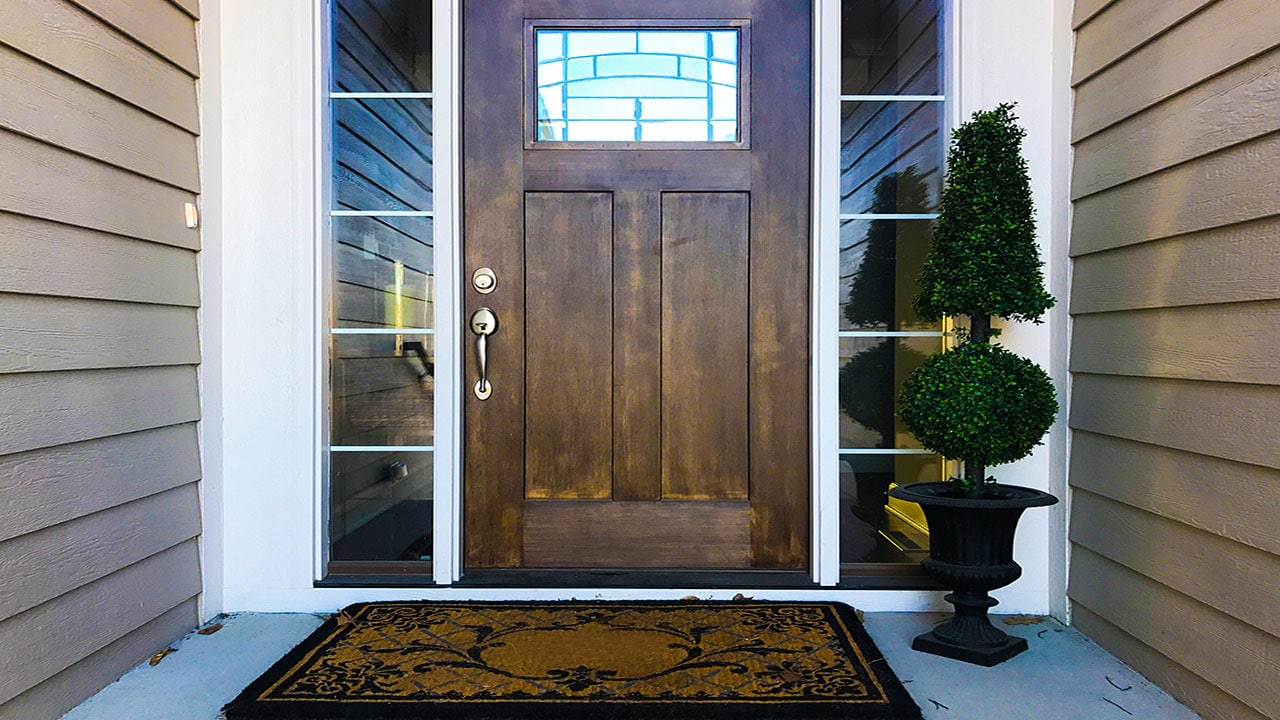
Toronto puts doors through a brutal annual cycle. Humid summers swell wood. Deep-freeze winters shrink it and heave the ground under the entry. A door that latched perfectly in April can bind in August and rattle in January.
If your latching problem shows up at the same time every year, this is almost certainly what’s happening. We wrote about both ends of the cycle separately: why doors stick in summer and winter door problems. The seasonal pattern also shows up in our overview of common door problems in Toronto’s weather.
For mild seasonal binding, the honest answer is often to leave it alone and let it pass. For a door that binds badly enough to prevent latching year-round, the fix is planing, rehanging, or addressing the frame. A door that sticks constantly is covered in our guide to sticking and jammed doors.
Cause 3: The Strike Plate Is in the Wrong Place
Sometimes the door is fine and the strike plate is the problem. If the misalignment is small — an eighth of an inch or less — you can often fix this without touching the door at all.
The lipstick trick
Put a dab of lipstick, chalk, or grease on the end of the latch bolt. Close the door until the bolt touches the strike plate, then open it. The mark shows you exactly where the bolt is landing relative to the hole.
Options, from least to most invasive
- File the strike hole. For an eighth of an inch or less, a metal file opens the hole in the right direction. Fast, reversible, invisible once the door is closed.
- Reposition the strike plate. Unscrew it, move it, and re-chisel the mortise. You’ll need to fill the old screw holes with wood filler or glued dowels so the new screws bite.
- Adjust the strike’s depth. Many commercial strikes have an adjustable tab that controls how tightly the door pulls in. Bending it slightly kills a rattle.
On access-controlled doors, the strike is an electrical component, not just a piece of metal. If your door has a buzzer entry or card reader, see electric strike repair and installation or, for maglock setups, magnetic lock repair. Don’t file an electric strike.
Cause 4: The Frame Has Shifted or Rotted

If you’ve checked the hinges and the strike and the door still won’t latch, look at the frame itself. Press on the jamb near the strike. If it flexes, moves, or feels soft, the frame is the issue. On exterior doors, water gets in at the bottom of the jamb and rots it from the inside out, so the surface can look fine while the wood behind it is gone.
A soft jamb won’t hold screws, which means every other fix you attempt will fail within weeks. This needs door frame repair, and for entries exposed to weather, exterior door frame repair. Depending on the material, the repair path differs for wood doors and steel doors.
Frame movement is also common after a forced entry, even when the damage looks cosmetic. If your door stopped latching after a break-in attempt, treat it as structural — see break-in repairs in Toronto.
Cause 5: Worn Latch Hardware
Latch mechanisms wear out. The spring weakens, the bolt stops extending fully, and eventually it retracts under pressure instead of holding. You’ll notice the handle feels loose or the bolt doesn’t snap back briskly when you release it.
Try a dry lubricant first — graphite or PTFE, not oil, which attracts grit and makes things worse over time. If a clean and lube doesn’t restore a crisp spring action, replace the latch. It’s an inexpensive part.
If the lock cylinder is also failing, replacing the whole lockset at once makes more sense than doing it twice. Our lock work covers Toronto, North York and Hamilton. If you’re upgrading anyway, our guide to front door security upgrades is worth reading first.
Cause 6: The Door Closer Is Set Too Weak
On commercial doors, a door that “won’t latch” is often a door closer that lacks the final push to drive the bolt home. The closer has a separate latch-speed adjustment that controls the last few inches of travel, and it’s the one people most often set wrong.
This is common on fire-rated assemblies, where a door that fails to latch fails its purpose entirely — see fire exit doors. We covered the adjustment procedure in detail in our commercial door closer adjustment guide and in how to make a door close tighter. If the door has a panic device, latching problems there need panic bar repair.
What About Sliding and Patio Doors?
Sliding doors don’t latch the same way, but they fail for related reasons: worn rollers drop the panel, the track fills with grit, and the latch hook no longer meets the keeper. Cleaning the track and adjusting the roller screws at the bottom of the panel fixes a surprising share of these. For the rest, see patio door repair and sliding door repair. Aluminum and glass entries are covered under aluminum and glass doors and storefront glass door repair.
What It Costs in 2026

Latching problems sit at the cheaper end of door repair, assuming you catch them before the frame goes. These are the ranges we publish for the related work, consistent with our 2026 commercial door repair cost guide:
| Work | Typical range |
| Storefront door adjustment | $250 – $480 |
| Commercial hinge replacement | $200 – $1,820 |
| Commercial lock repair or replacement | $220 – $1,500 |
| Emergency call-out | $280 – $650 |
The spread is wide because a strike-plate adjustment and a full frame rebuild are both technically “the door won’t latch.” What moves the number is whether the frame is sound, whether the door is residential or commercial, and whether the hardware is standard or access-controlled. We quote after we see it. You can request a free estimate and we’ll tell you which category you’re in.
How to Stop It From Coming Back
- Check your hinge screws once a year. Two minutes with a screwdriver prevents most sagging.
- Replace weatherstripping when it flattens. Compressed seals let the door sit wrong and let air through. See weatherstripping replacement.
- Keep the threshold sound. A worn threshold changes how the door sits — see threshold replacement.
- Don’t let anyone slam it. Slamming is what loosens hinges and shifts strikes in the first place.
- On commercial doors, inspect the closer quarterly. Latch speed drifts as seals wear.
Our list of 10 signs your door needs immediate repair covers what else to watch for, and common door problems across the GTA puts latching in context with everything else we see.
Frequently Asked Questions
Why does my door latch in winter but not in summer?
Humidity. Wood absorbs moisture and swells in summer, so the door sits deeper in the opening and the bolt no longer reaches the strike hole cleanly. If it self-corrects each fall, minor planing or a strike adjustment usually settles it permanently.
Can I just move the strike plate myself?
For small misalignments, yes — filing the hole is a reasonable DIY job. Moving the plate more than a couple of millimetres means re-chiselling the mortise and filling old screw holes, and a sloppy result is visible forever. Don’t attempt it on an electric strike.
My door latches but I still feel a draft. Is that the same problem?
Related but separate. If the bolt engages and air still comes through, the issue is the seal, not the alignment. Look at weatherstripping and the threshold first.
Is a door that won’t latch a code violation in a commercial building?
On fire-rated and exit door assemblies, positive latching is part of what the assembly is required to do, so a door that doesn’t latch is a genuine compliance concern, not just an inconvenience. Have it looked at rather than propped or taped.
How fast can you get here?
We run same-day and 24/7 service across Toronto and the GTA. If the door can’t be secured, that’s an emergency door repair and we prioritise it.
Where We Work
We repair doors across Toronto and the GTA, including Etobicoke, North York, Scarborough, Vaughan, Markham, Richmond Hill, Mississauga, Oakville and Hamilton. See what customers say on our reviews page, or browse the FAQ. We also handle storefront entry doors and garage doors.
Door Still Won’t Latch? Let’s Fix It Today.
20+ years, 14+ years serving Toronto, licensed and insured, with a warranty on every job. Same-day and 24/7 emergency service across Toronto and the GTA.