
Multi-Point & Patio Door Lock Repair in Toronto (2026)
Modern front doors, French doors and patio doors often use a multi-point lock: one handle that throws two or three locking points at once. When it fails, the door either won't lock or won't open. Both are fixable, usually without replacing the door.
Door Won't Lock or Won't Open?
Tell us the door type and what the handle is doing. A photo of the lock edge helps a lot.
No obligation. We reply quickly, 24/7.
What Is a Multi-Point Lock, and Why Does It Fail?
If you lift your door handle before turning the key, you almost certainly have one.
A multi-point lock is a long steel strip mounted inside the edge of the door. In the middle sits a gearbox connected to the handle and cylinder. When you lift the handle, the gearbox drives hooks, rollers or bolts above and below the main latch into keepers in the frame. The door is then held at three or more points instead of one. That is why these locks are standard on many uPVC, fiberglass and newer steel entry doors, as well as French doors and many patio doors.
The design is secure, but it depends on everything staying in line. When a door drops a few millimetres on its hinges, swells in summer, or shifts with the frame in winter, the locking points start rubbing their keepers. You feel it as a handle that gets harder and harder to lift. People force it, and the gearbox inside the door takes the strain until something breaks.
The line we hear most often is "I had to force the handle just to lock it." That is the moment to call. Caught early, the fix is an alignment and a keeper adjustment. Left long enough, the gearbox fails and the door can lock you out, or lock you in.
Alignment first
Most stiff multi-point locks are a door-alignment problem, not a lock problem. We fix the cause, not just the part.
Parts matched
We match gearboxes, keepers and cylinders to your lock. Older or unusual locks can often be repaired or retrofitted.
24/7 lockouts
A failed gearbox can leave a door stuck shut. We open it without damaging the door and repair the lock.
9 Signs Your Multi-Point or Patio Lock Needs Attention
The earlier you catch these, the cheaper the repair.
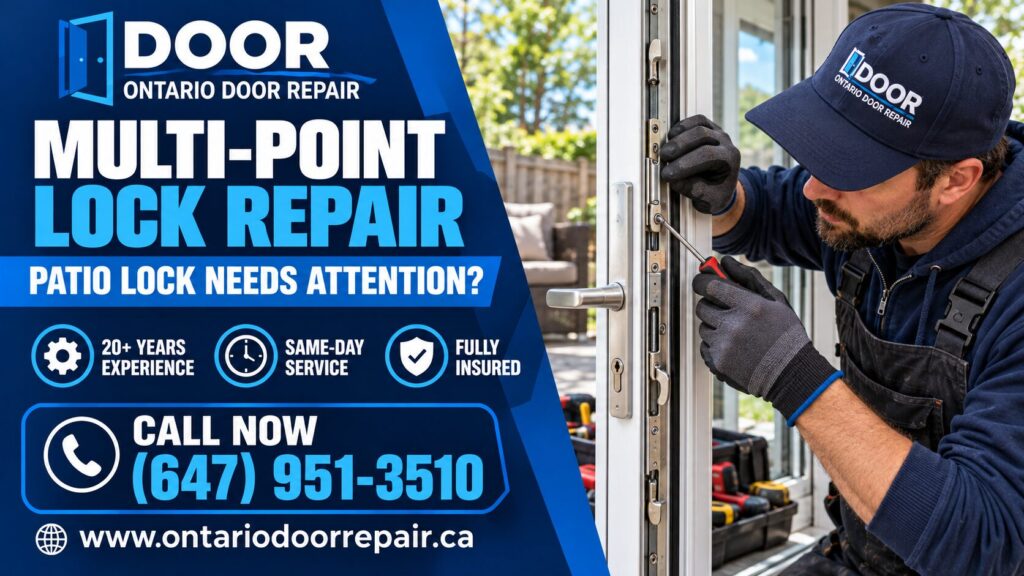
Handle is hard to lift
The locking points are rubbing their keepers because the door has dropped or swollen.
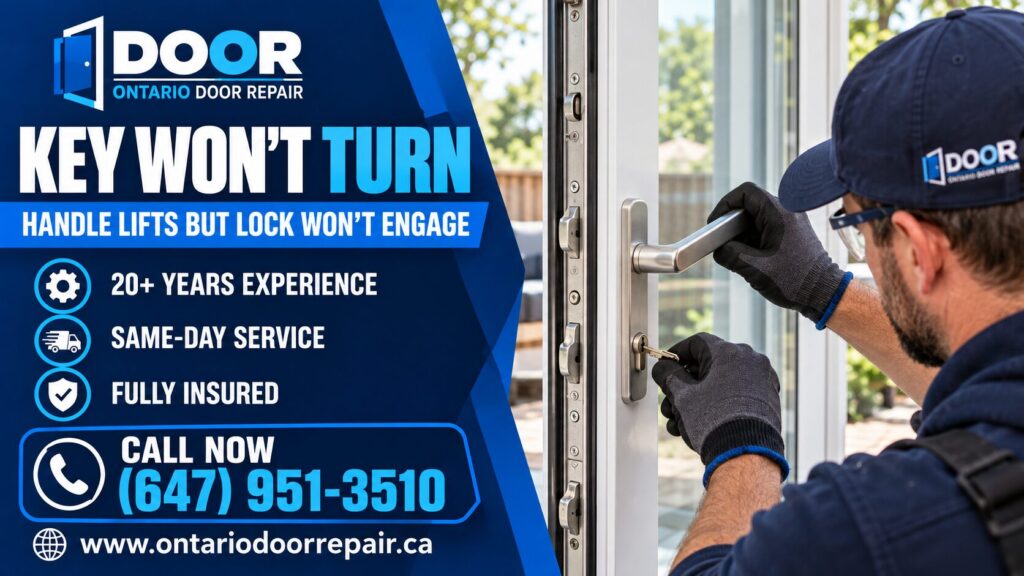
Handle lifts but key won't turn
The hooks or bolts aren't fully engaged, so the cylinder can't turn to deadlock.
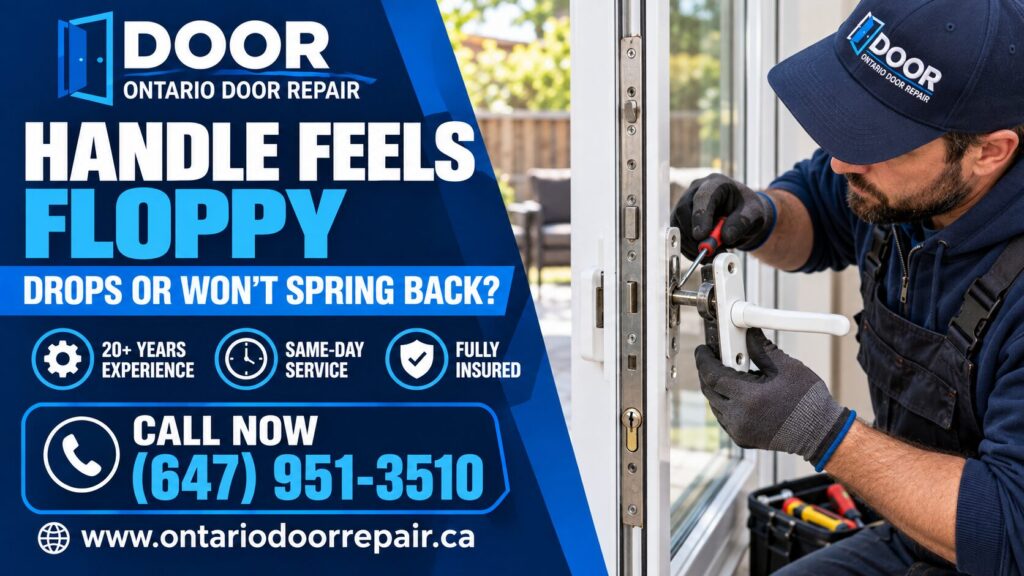
Handle drops or feels floppy
A broken spring in the handle or in the gearbox. Common on older doors.
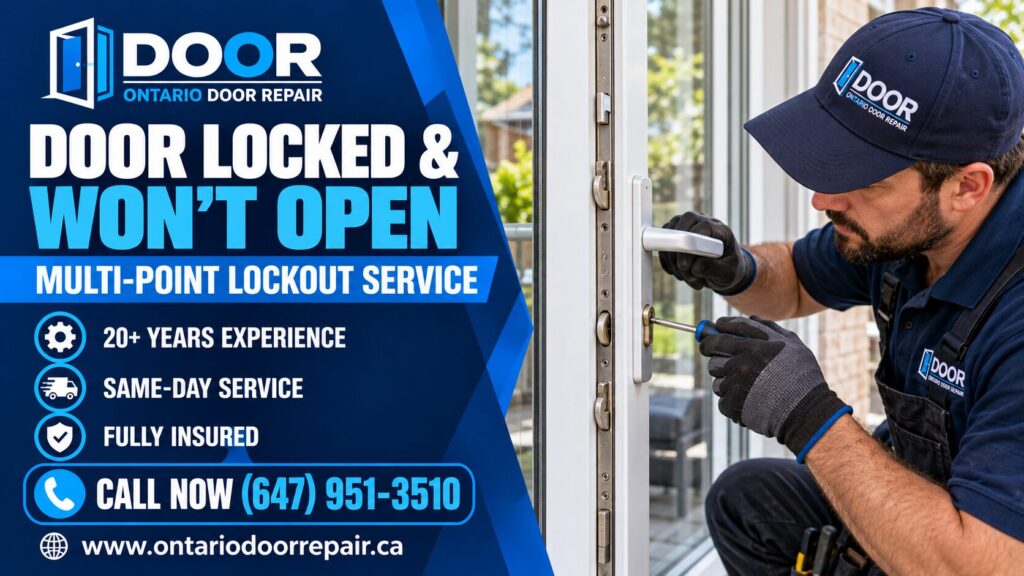
Door locked and won't open
The gearbox has failed with the locking points thrown. The door is stuck locked.
Patio door latch won't catch
The hook on a sliding door lock misses its keeper because the door has dropped on its rollers.
Patio handle broken or loose
Sliding door handles crack and their internal latches wear out.
French door shoot bolts stuck
The top and bottom bolts on the inactive leaf seize or miss their holes.
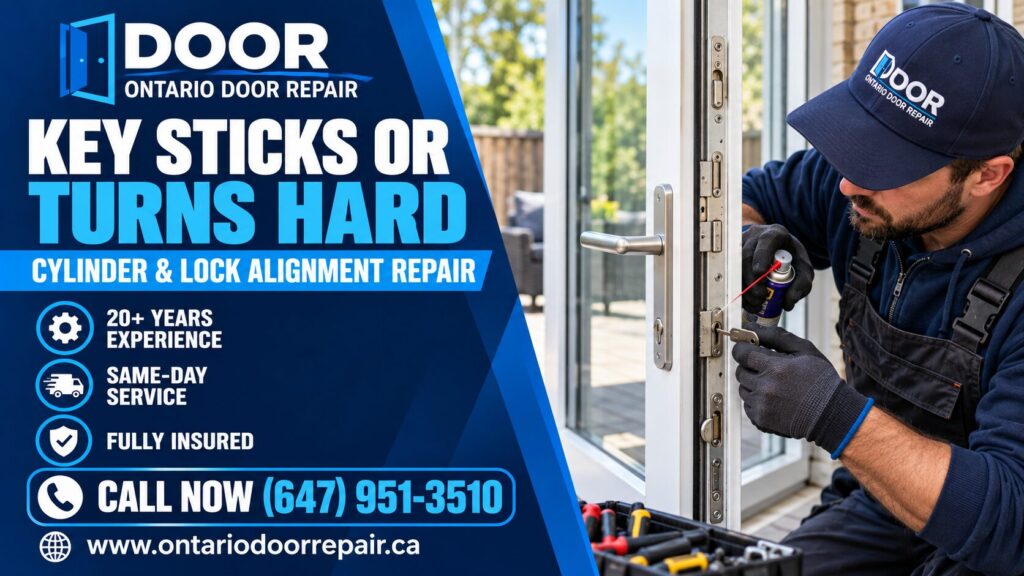
Key sticks or turns hard
A dirty or worn cylinder, or a cam that no longer sits right in the gearbox.
Cold air around the locked door
When locking points don't pull the door tight, the seals don't compress.
Locked out, or locked in?
If your multi-point lock has jammed with the door shut, call now. We handle lock emergencies 24/7 across Toronto and the GTA.
Repair, Rebuild or Replace the Lock?
A multi-point lock rarely has to be replaced as a whole. It is made of parts, and each part can usually be repaired or changed on its own.
Usually repaired
- Stiff handle from misalignment
- Worn or bent keepers
- Broken handle springs
- Worn cylinder
- Failed gearbox (swapped on its own)
- Patio hook latch out of line
- Seized shoot bolts
Full strip replacement when
- The strip itself is snapped or bent
- Several locking points are worn out
- No gearbox is available for the model
- The door is being replaced anyway
- You want a higher-security lock
- The existing lock was badly retrofitted
We check the door first, because a new lock fitted to a sagging door will fail the same way. That means looking at the hinges, the frame and the fit against the weatherstrip before we touch the lock. If the door is the real problem, we tell you, and we cover that in door won't close or lock.
How We Repair a Multi-Point Lock
What a typical visit looks like.
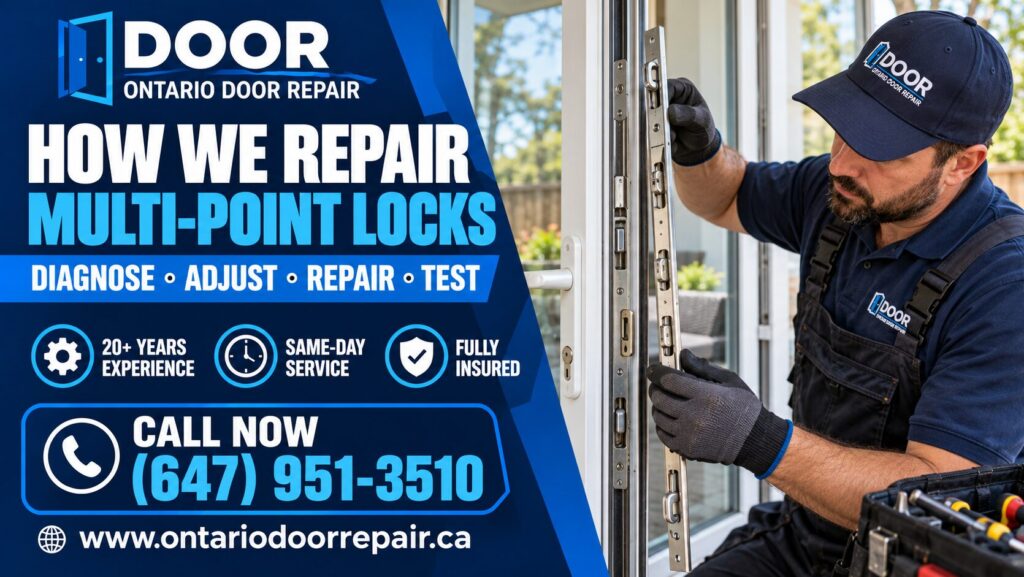
1. Photos first
A photo of the lock faceplate on the door edge usually tells us the brand and gearbox type.
2. Diagnose
We test the handle, key and locking points with the door open and closed to find where it binds.
3. Align the door
Hinges, keepers and strike are adjusted so the locking points slide in without force.
4. Replace worn parts
Gearbox, springs, cylinder, keepers or handles, matched to your lock.
5. Test and seal
We lock and unlock it repeatedly and check the door pulls tight against the weatherstrip.
6. Show you how
A quick explanation of how to use it so it lasts: lift fully, then turn the key.
Patio Door Locks: A Special Case
Sliding patio door locks are simpler than multi-point entry locks, but they fail for their own reasons.
Hook latches that miss
Most sliding patio doors use a hook latch inside the handle that swings up into a keeper on the frame. When the bottom rollers wear down, the door sits lower, and the hook no longer reaches the keeper. Customers often think the lock is broken, when the real fix is raising the door on its rollers. That is why we check the track and rollers on every patio lock call.
Handles and mortise locks
The handle set and the latch or mortise lock can be replaced on their own. Hole patterns differ between brands, so a photo of the edge of the door where the lock sits helps us bring the right one.
Extra security for patio doors
Sliding doors are a common entry point in break-ins. A secondary foot lock or a keyed lock on the handle adds real protection for little cost. We also cover upgrades in front door security upgrades.
Multi-Point Lock Types We See in Toronto Homes
Knowing which kind you have helps explain what went wrong.
Hook-bolt locks
Common on uPVC and composite doors. Two hooks swing out above and below the latch and grab steel keepers in the frame. They pull the door tight against the seal, which is great for drafts, but they are the least forgiving when the door drops. A few millimetres of sag and the hooks start catching the edge of the keeper.
Roller-cam locks
Instead of hooks, small rollers along the edge of the door slide into keepers when the handle is lifted. The rollers can be adjusted with an Allen key to change compression, which is useful when the door seals too tightly in summer or too loosely in winter.
Shoot-bolt and deadbolt systems
Some doors throw straight bolts up into the head of the frame and down into the sill, plus a deadbolt at the centre. You see these on many French doors and higher-security entry doors. Dirt in the sill hole and frame movement are the usual causes of trouble.
Patio door hook latches
Sliding patio doors usually use a single hook latch, sometimes with a second hook or a foot lock. They are simple, but completely dependent on the door sitting at the right height on its rollers.
Why Toronto weather matters
Doors move with the seasons. In a humid July a wood or composite door swells and the locking points squeeze into their keepers. In a cold January the frame contracts and the gaps open. A lock that was adjusted perfectly in spring can be stiff by August and loose by February. That's why we often recommend a quick seasonal adjustment instead of a new lock, and why our guide to door problems in Toronto's weather spends so much time on alignment.
Condo and rental properties
In condos, balcony door locks are managed by the owner, but common-area doors belong to the building. If you manage a property, see condo door replacement rules and our maintenance contracts for keeping many doors working at once.
Related Lock and Door Services
Other services our customers usually need alongside a lock repair.
Lock change in Toronto
Rekey or replace locks after a move or lost keys.
Smart lock installation
Keypad and smart locks fitted to the door you have.
French door repair
Shoot bolts, astragals and leaves that don't meet.
Patio door repair
Rollers, tracks, handles and glass.
Front door repair
Entry doors that stick, drag or won't lock.
Emergency door repair
Locked out, locked in or can't secure the door.
What Affects the Cost
Every lock is different, so we quote after seeing it. These are the main factors.
- Where the fault is. An alignment is quick. A gearbox or full strip takes longer.
- The lock brand. Common gearboxes are easy to source. Some older locks need adapted parts.
- Whether the door is stuck locked. Opening a jammed door carefully is extra work.
- The door's condition. Hinge and frame repairs sometimes need to come first.
- Upgrades. New cylinders, higher-security or smart locks add parts.
- Timing. Emergency and after-hours service is available 24/7.
General price guidance is in our residential door repair cost guide. For a quote on your lock, send us a photo.
Keep Your Multi-Point Lock Healthy
Simple habits that prevent most gearbox failures.
- Lift the handle fully before turning the key. Never use the key to pull the bolts in.
- If the handle gets stiff, get the door adjusted. Don't force it.
- Lubricate the locking points and keepers once or twice a year with a light lubricant.
- Use graphite, not oil, in the key cylinder.
- Check hinge screws each fall. A dropped door is the number one cause of lock failure.
- Keep patio door tracks clean so the door doesn't sink on its rollers.
Multi-Point & Patio Lock FAQ
Real questions from homeowners.
My handle won't lift to lock the door. Can it be fixed?
Yes. On multi-point locks this usually means one of the locking points is out of line with its keeper, or the gearbox inside the door is wearing out. Both are repairable.
Can you find parts for an old or unusual lock?
Often. Many older locks can be repaired or matched. If not, we fit a replacement that suits the existing holes in the door.
My door is locked and won't open. What do I do?
Don't pry the door edge. Call us. We open the door from the lock side and replace the failed gearbox.
My patio door lock won't catch.
The door has usually dropped on its rollers. Raising it and adjusting the keeper normally fixes the lock.
Do I need a new door if my multi-point lock fails?
No. The lock is serviced or replaced inside the existing door.
Can you add a smart lock to a multi-point door?
Some multi-point locks accept smart or keypad upgrades. We check compatibility before recommending one.
Can I send photos for a quote?
Yes. Send photos or a short video on WhatsApp at 647-866-0956.
Do you come the same day or on weekends?
Yes. We work 24/7, including evenings, weekends and holidays.
More Guides
Related reading from our team.
Door problems and locks go hand in hand. Read door won't latch, how to make a door close tighter, common door problems in the GTA and why doors stick in summer. Business owners should see commercial door repair, electric strike repair, magnetic locks and access control door repair. For the door itself: residential door repair, steel doors, wood doors and screen and storm doors.
Lock Repair Across the GTA
Local lock and door pages near you.
Get your door locking properly again
Multi-point, patio and French door locks repaired by licensed, insured technicians across Toronto and the GTA, 24/7.
📞 Call 647-951-3510 Request a Free Estimate