
Commercial Door Alignment Repair Toronto: Doors That Rub, Drag or Won't Close (2026)
A door that rubs on the frame, scrapes the floor or has to be pushed to latch is a door out of alignment. It wears out hinges, closers and locks, and on a business it becomes a security and accessibility problem. Most of the time it can be fixed in one visit.
Fix a Misaligned Door
Tell us where the door rubs or what it won't do. A short video of the door closing is very helpful.
No obligation. We reply quickly, 24/7.
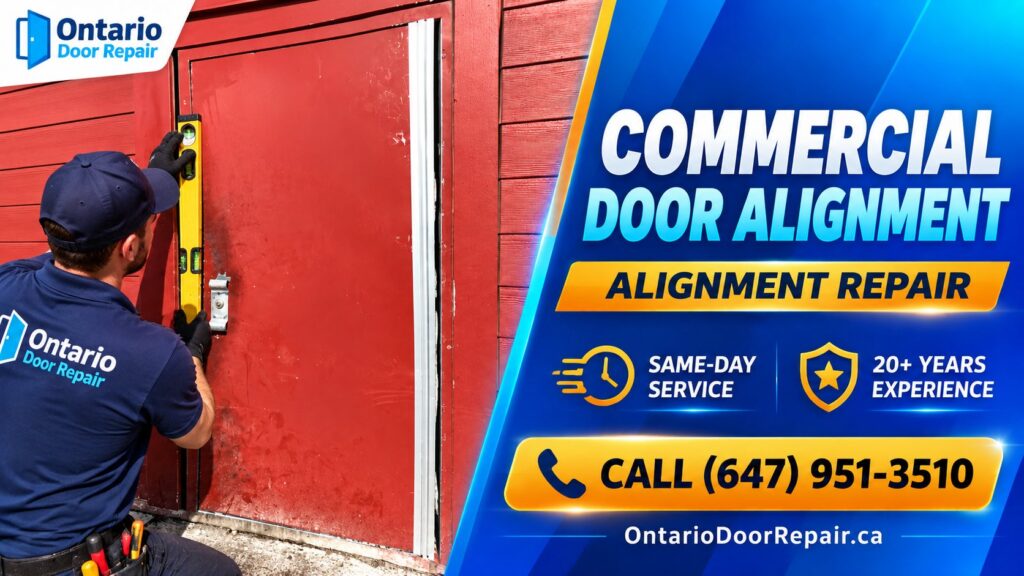
What Door Alignment Means
Why a door that used to close perfectly starts to rub.
A door is aligned when it hangs square in its frame with an even gap on all sides, clears the floor, and closes onto the strike without any help. Commercial doors are heavy and used hundreds of times a day, so that alignment slowly drifts. Hinge knuckles wear, screws loosen in the frame, pivots wear down, and closers pull harder or softer than they should.
The first sign is usually small: the top corner on the latch side starts to kiss the frame, or staff get used to giving the door an extra push. Left alone, the rubbing turns into dragging, the latch stops catching, and the door gets left open or unlocked because nobody can close it properly. By then, the hinges, closer and lock are all wearing faster than they should.
Alignment repair is about finding out why the door moved and fixing that, not just planing the edge until it stops rubbing.
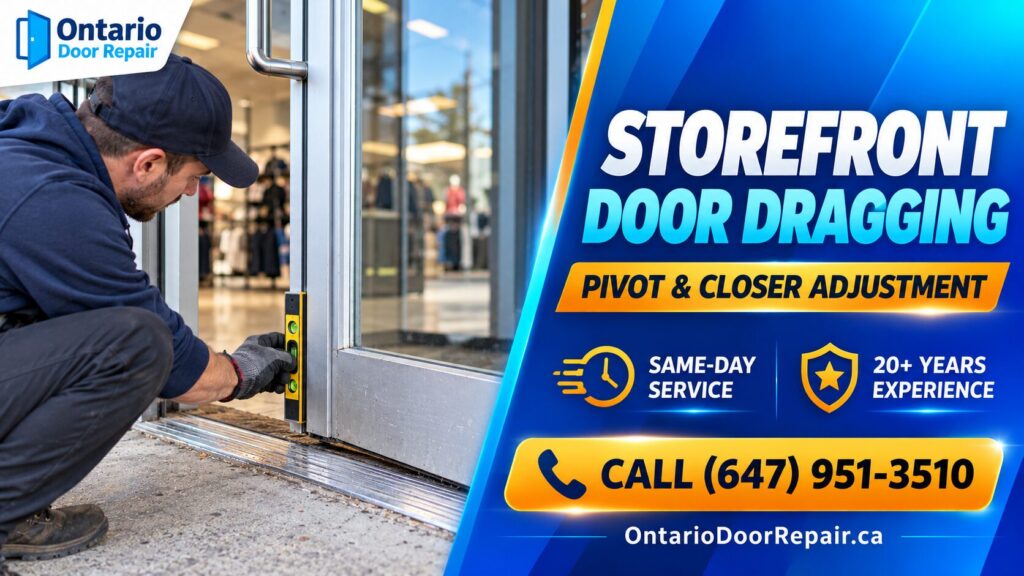
Find the cause
Hinges, pivots, frame, closer or floor: we check all of them.
Fix, don't file
We correct the hang instead of trimming the door so it still seals.
Latches again
An aligned door closes and locks on its own, every time.
Signs Your Commercial Door Is Out of Alignment
Each symptom points to a likely cause.
Rubs at the top latch corner
The door has dropped on the hinge side, so the top corner swings into the frame.
Won't close all the way
The closer can't overcome the rubbing, or the latch hits the strike too low.
Drags on the floor
Hinge wear, loose frame screws or a worn bottom pivot on glass doors.
Latch misses the strike
The door has dropped a few millimetres, so the latch or panic bar can't catch.
Gaps uneven all around
The frame itself has moved or bent, often from impacts or building settlement.
Door moves when you lift it
Hinge screws have stripped out of the frame or the hinges are worn.
Door stuck open or won't lock?
We realign commercial doors the same day across Toronto and the GTA. Call 24/7.
What Causes Commercial Doors to Go Out of Line
Usually more than one of these at once.
Worn hinges
Standard butt hinges on a heavy steel door wear at the knuckles. A millimetre of wear on each hinge becomes several millimetres of drop at the latch side. On busy doors, upgrading to heavier hinges or a continuous hinge spreads the load along the whole edge and stops the drop.
Loose screws in the frame
Hinge screws that only bite into the thin frame metal, or into a soft wood jamb, loosen over time. The door sags even though the hinges are fine. Longer screws into the structure or reinforcing plates fix it.
Worn pivots on storefront doors
Aluminum and glass storefront doors usually hang on top and bottom pivots rather than hinges. When the bottom pivot wears or the floor closer spindle fails, the door drops and drags. See storefront floor pivot repair and pivot hinge replacement.
Closer problems
A closer set too strong pulls the door hard into the frame; one that's leaking lets it drift. Either way, the door stops closing where it should. See door closer repair.
Frame movement
Buildings settle, floors heave in winter, and frames take hits from carts and deliveries. A frame that's no longer square can't hold a square door. Aluminum frames can bend; steel frames can pull away from their anchors.
Seasonal changes
In Toronto winters, frost can lift slabs and thresholds, and doors that were fine in summer suddenly drag. Some movement is seasonal and can be adjusted for; some needs the threshold or frame corrected. See winter-proofing commercial doors.
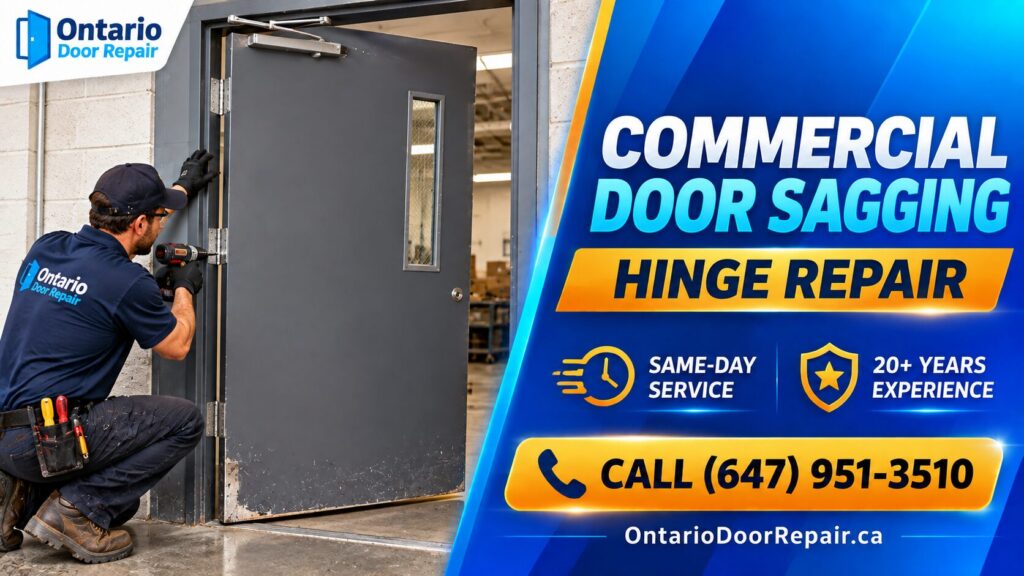
How We Realign a Commercial Door
The order matters: fix the hang first, then the hardware.
1. Watch it work
We open and close the door, check the gaps and see exactly where it rubs or catches.
2. Check the support
Hinges, pivots, screws and frame anchors, since this is what holds the door up.
3. Fix the hang
Tighten, re-anchor, shim or replace hinges and pivots until the door hangs square.
4. Correct the frame
Straighten, shim or re-anchor a frame that has moved.
5. Adjust the hardware
Strike, exit device and closer are adjusted to the corrected door.
6. Test repeatedly
The door is cycled many times to make sure it closes and latches on its own.
Doors We Realign
Every type of commercial door.
Storefront and glass doors: aluminum doors on pivots or offset hinges, frameless glass doors on floor closers. See aluminum and glass doors.
Hollow metal doors: rear exits, stairwell doors and service doors in steel frames. See steel door repair and commercial back doors.
Fire-rated doors: doors that must close and latch on their own to keep their rating. Misalignment on these is a code issue, not just an annoyance. See fire door inspection.
Office and interior doors: heavy solid-core doors on suites and meeting rooms that stop latching as they settle.
Automatic and accessible doors: a door that drags makes the operator strain and fail. See automatic door operator repair and barrier-free door requirements.
Why It's Worth Fixing Now
A rubbing door costs more every month it's left.
- Security. A door that doesn't latch on its own gets left unlocked.
- Accessibility. A door that needs a shove is hard to use for people with mobility devices, strollers or deliveries.
- Fire safety. Fire doors that don't close and latch fail inspection.
- Hardware wear. Rubbing overloads hinges, pivots and closers until one of them breaks.
- Energy loss. Uneven gaps let heat out and drafts in all winter.
- Bigger repair later. A worn pivot or torn-out hinge is a bigger job than an adjustment.
What Affects the Cost
Most alignment jobs are quick. Some need parts.
- Adjustment only. Tightening, shimming and adjusting hardware.
- Hinge or pivot replacement. Worn parts replaced.
- Continuous hinge upgrade. For heavy, high-traffic doors that keep dropping.
- Frame repair. Re-anchoring or straightening a frame.
- Closer or exit device work. Adjusting or replacing hardware after the door is aligned.
- Door type. Storefront pivot doors vs. hinged steel doors.
See the commercial door repair cost guide.
Related Commercial Door Services
Often part of the same visit.
Door Alignment FAQ
Questions business owners and property managers ask.
Why does my commercial door rub at the top?
The door has dropped on the hinge side, usually from worn hinges, loose screws or a worn pivot. The top latch corner then swings into the frame.
Can you just shave the door so it stops rubbing?
We avoid it. Trimming hides the problem and leaves gaps. Fixing the hang keeps the door sealing and latching properly.
Our door only locks if we push it. Is that alignment?
Usually, yes. The latch is hitting the strike too high or low. Realigning the door and adjusting the strike fixes it.
How long does alignment take?
Most doors are done in one visit. Worn pivots or hinges may need parts.
Can a glass storefront door be realigned?
Yes. Storefront doors are adjusted at the pivots or floor closer. Worn pivots are replaced.
Why do our doors drag only in winter?
Frost can lift the floor slab or threshold. Some of that can be adjusted; sometimes the threshold needs correcting.
Will an out-of-line door damage the closer?
Yes. The closer has to work against the rubbing and wears out much faster.
Do you do maintenance for multiple doors?
Yes. See our commercial door maintenance contracts for plazas and buildings.
More Guides
Related help from our team.
Commercial Door Repair Across the GTA
Local commercial door pages near you.
Doors that close, latch and lock on their own
Commercial, storefront and steel door alignment across Toronto and the GTA. Licensed, insured and available 24/7.
📞 Call 647-951-3510 Request a Free Estimate