Door frame rot is the quiet problem behind most “my door won’t close properly” calls we get across Toronto and the GTA. The door itself is usually fine. The frame holding it — the jamb, the sill and the bottom few inches of trim — has been soaking up rain, snowmelt and road salt for years, and it has finally gone soft. This guide covers how to spot rot early, what it costs to fix in 2026, when a repair is enough, and when the frame has to be replaced.
Need it looked at today? We’re a licensed, insured Toronto door company with 20+ years on the tools and same-day availability. 📞 Call 647-951-3510 or get a free estimate.
What Causes Door Frame Rot in the GTA
Rot is a moisture problem first and a wood problem second. Wood needs to stay above roughly 20% moisture content for fungus to take hold, and in Ontario an exterior door frame gets pushed past that line several times a year.
The four culprits we see most
- Freeze-thaw cycling. Water gets into a hairline crack in the paint, freezes, expands the crack, and lets in more water next time. Toronto swings across 0°C dozens of times each winter — few climates are harder on exterior wood.
- Road salt and snowmelt. Salt-laden slush sits against the bottom of the jamb and the sill for weeks. Salt holds moisture, so the wood never gets a chance to dry.
- Failed caulking and weatherstripping. Once the seal between frame and brick or siding opens up, water runs behind the frame where you can’t see it. This is why rot is almost always worse than it looks from the outside.
- No overhang. Side doors and back doors rarely have a porch roof. Rain hits the frame directly, every storm, for twenty years.
We wrote more about how the local climate wrecks doors in common door problems in Toronto’s challenging weather and in our 2026 GTA door problems guide.
7 Signs Your Door Frame Is Rotting
1. The bottom of the jamb is soft
Press a screwdriver into the bottom 6 inches of the frame, beside the sill. If it sinks in with light pressure, that wood is gone. Healthy wood resists.
2. Paint is bubbling or flaking near the base
Paint fails from moisture pushing out from behind it. Bubbling low on the frame almost always means wet wood underneath, even if the surface still looks solid.
3. The door sticks, drags or won’t latch
A rotted jamb loses structure, the frame shifts, and the door no longer sits square in the opening. If yours is dragging, see professional help for sticking or jammed doors.
4. Screws in the hinges or strike plate won’t hold
Screws spinning in place mean the wood they bite into has turned to pulp. Retightening does nothing — the fibre is gone.
5. Daylight, drafts, or visible gaps
If you can see light around the closed door, or feel cold air in winter, the frame is no longer sealing. That’s an energy bill problem and a security problem.
6. Dark staining, mould or a musty smell
Black or grey staining and a damp smell in the entryway mean the moisture has been there long enough for fungus to establish.
7. Insects around the threshold
Carpenter ants and other pests target damp, softened wood. Seeing them at your door is often the first clue.
More warning signs across the whole door: top 10 signs your door needs immediate repair. 📞 Not sure what you’re looking at? Send us a photo or call 647-951-3510.
Repair or Replace? How We Decide
When a repair is the right call
If the damage is confined to a section of the jamb or the brickmould, and the rest of the frame is sound and square, we cut out the rotted section and splice in new material — treated or primed to match. This is called a Dutchman repair, and done properly it’s structurally identical to the original. It’s faster, cheaper, and there’s no need to disturb the brick, siding or interior trim.
When the frame has to be replaced
Once rot reaches the sill, the hinge-side jamb, or more than roughly a third of the frame, patching it is throwing money away. The same goes for a frame that’s out of square, because you’ll never get the door to seal against it. At that point full door frame repair or exterior door frame replacement is the honest answer — and we’ll tell you that up front rather than sell you a patch that fails in two winters.
Consider upgrading the material while it’s open
If the frame is already coming out, this is the cheapest moment you will ever get to upgrade. A composite or steel-wrapped frame will not rot again. If your door is wood, we handle wood door repair; if it’s steel, see steel door repair. For a full residential job we cover it under residential door repair.
Door Frame Rot Repair Cost in Toronto (2026)
Pricing depends on how far the rot has travelled, whether the sill is involved, and whether brick or siding has to come off. These are the ranges we quote in the GTA in 2026. An on-site look is the only way to be exact, and ours is free.
| Job | Typical range (2026) | Time on site |
|---|---|---|
| Spot repair / Dutchman splice in one jamb | $250 – $500 | 2–3 hours |
| Brickmould / exterior trim replacement | $350 – $700 | 3–4 hours |
| Threshold / sill replacement | $400 – $900 | Half day |
| Full residential frame replacement | $900 – $1,800 | Half to full day |
| Commercial / steel frame replacement | $1,500 – $3,500+ | Full day |
Ranges exclude the door slab itself and assume standard access. Commercial pricing varies more — see our 2026 commercial door repair cost guide for the full breakdown, or our commercial door repair service page.
Rotted Frame? We’ll Look at It Today.
Free estimate · Licensed & insured · 20+ years · 14+ years serving Toronto · Warranty on every job
How We Repair a Rotted Door Frame
Step 1 — Probe and map the damage
We test the frame with an awl and a moisture meter to find where sound wood ends. Rot always extends past what you can see, and quoting without probing is guesswork.
Step 2 — Cut back to solid material
Every soft fibre comes out. Leaving “just a bit” of punky wood behind is the single most common reason a rot repair fails — the fungus is still alive in it.
Step 3 — Splice or replace
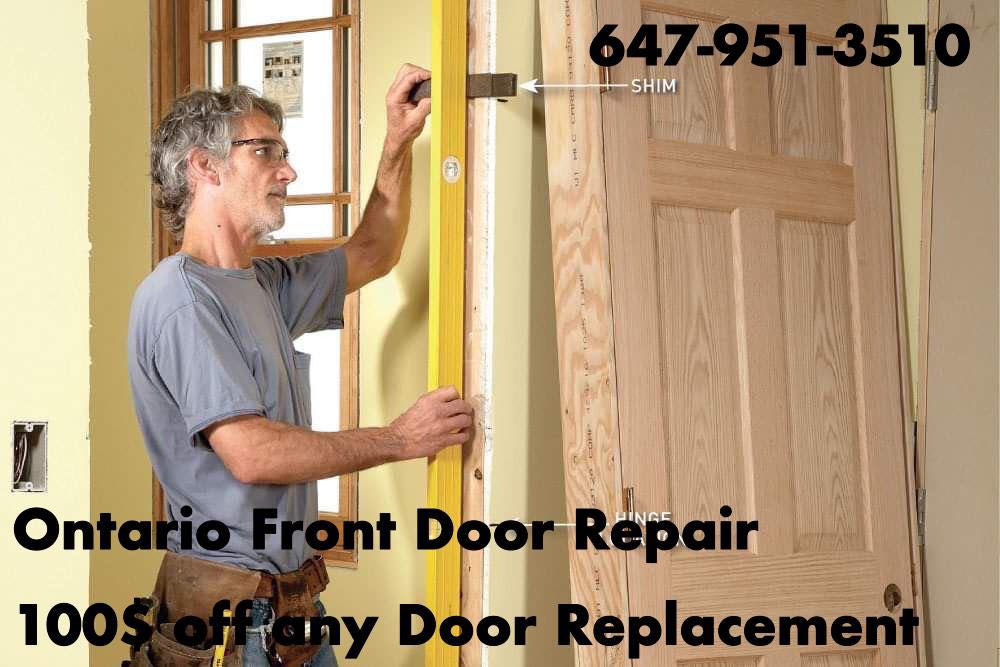
New material is cut to fit, back-primed on all six sides, bedded in adhesive and mechanically fastened. On a full replacement we set the new frame plumb and square, shim it properly, and re-hang the door to it.
Step 4 — Seal the water out for good
This is the step that decides whether we’re back in five years. New caulk at the frame-to-wall joint, fresh weatherstripping, a properly pitched sill, and a drip cap if there isn’t one. Rot doesn’t come back if water can’t sit on the wood.
Step 5 — Test and adjust
The door has to close with even reveals, latch without a shove, and seal all the way around. We adjust hinges and the strike until it does.
Commercial and Storefront Frames Rot Too
On commercial buildings the frame is usually hollow metal, and the failure mode is rust rather than fungus — but the cause is identical: water and salt sitting at the base. A rusted-through commercial frame won’t hold an anchor, which means the closer and the lock stop working correctly and the door becomes a security and code liability.
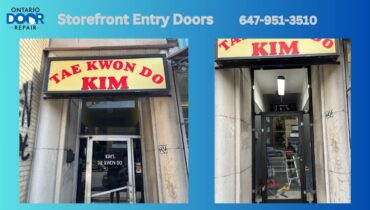
We handle this on storefront entry doors, aluminum and glass doors, and fire exit doors — the last one matters, because a fire-rated assembly with a compromised frame no longer meets code. If a frame has failed after a forced entry, that’s break-in repair territory and we board up and secure the same day. We also service garage doors.
How to Stop It From Happening Again
- Re-caulk every 2–3 years. A $10 tube of exterior caulk is the cheapest insurance you will ever buy on a door.
- Keep paint intact. Touch up chips on the bottom of the frame as soon as you see them — that’s where the water gets in.
- Clear snow and salt off the threshold. Don’t let slush pile against the frame all winter.
- Replace tired weatherstripping. If it’s hard, cracked or compressed flat, it isn’t sealing.
- Add a storm door or drip cap on any exposed door with no overhang.
- Check the sill pitch. Water must run away from the house, not pool at the door.
Frequently Asked Questions
Can I just fill rotted wood with epoxy?
For a small, isolated, non-structural pocket — yes, epoxy consolidant works. For a jamb that’s soft over several inches, or anything the hinges or strike plate screw into, no. Epoxy fills the void but it doesn’t restore the strength the frame needs, and it hides the moisture path that caused the rot in the first place.
How long does the repair take?
A spot repair is usually 2–3 hours. A full frame replacement is a half to a full day. In almost all cases you have a secure, locking door the same day — we don’t leave openings open overnight.
Does rot spread to the door itself?
It can. Wet frames keep the edge of the door damp, and on a wood door that means the bottom rail starts to go too. Fixing the frame early usually saves the door.
Do you work on weekends and emergencies?
Yes. We run 24/7 emergency door repair across Toronto and the GTA — including same-day board-ups when a frame has failed completely.
Is the work warrantied?
Every job carries a warranty on our workmanship. You can read what customers say on our reviews page, and there’s more general information on our FAQ page.
Door Frame Rot Repair Across Toronto and the GTA
We’re on the road across the region every day: Etobicoke, North York, Scarborough, Vaughan, Markham, Richmond Hill, Mississauga, Oakville and Hamilton. See everything we do on the Ontario Door Repair home page.
Rot doesn’t stop on its own, and it gets more expensive every season you leave it. 📞 Call 647-951-3510 for a free, no-pressure look at your frame — or request an estimate online.