
Door Slab Replacement in Toronto: Replace the Door, Keep the Frame (2026)
When a door is damaged but the frame around it is solid, you don't need a full pre-hung replacement. A new slab, cut, drilled and hung in your existing frame, keeps your trim, your paint and your budget intact.
Replace Just the Door
Tell us which door and why it needs replacing. A photo of the door and frame helps us plan.
No obligation. We reply quickly, 24/7.
What Is a Door Slab, and When Is It Enough?
A door slab is just the door panel itself: no frame, no hinges pre-attached, no casing.
Most door replacements are sold as pre-hung units: a new door already mounted in a new frame. Installing one means tearing out the old frame, the trim around it, and often some drywall or siding, then patching and painting afterward. That is the right answer when the frame is rotten, out of square or damaged. It is overkill when the only thing wrong is the door.
A slab replacement swaps only the door. The new slab is sized to the opening, the hinge mortises and lock holes are cut to match your frame, and the door is hung on the existing (or new) hinges. Your frame, casing and paint stay untouched. Customers searching for this often say the same thing: "We looked for a long time for a company that would replace the door without doing the full frame." Many companies only sell pre-hung units.
Slab replacement makes sense for kicked-in or warped doors, doors damaged in a break-in, cracked or rotted door skins, doors that were cut badly years ago, and interior doors you want to upgrade without redoing the trim. It also works for many steel and commercial doors where the frame is still sound.
Less demolition
No tearing out frames or trim. The job stays at the door.
Keeps your finishes
Casing, paint and siding around the door stay as they are.
Often faster
Many slab jobs are measured once and hung in one visit when the new door arrives.
Signs You Need a New Door, Not a New Frame
Check these before you order a full replacement.
Door kicked in, frame intact
The door is split at the lock side, but the jamb only has minor damage that can be repaired.
Wood door rotted at the bottom
Water has soaked the bottom rail, but the frame is dry and solid.
Door warped
The door no longer sits flat against the stop, even after hinge adjustment.
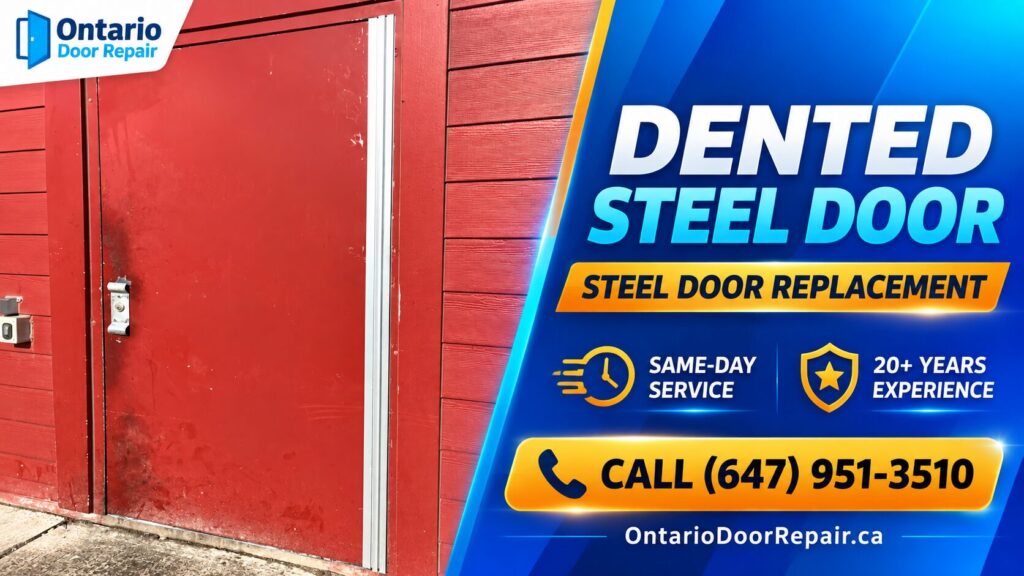
Steel door skin dented or rusted
The metal skin is creased, rusted through or delaminating.
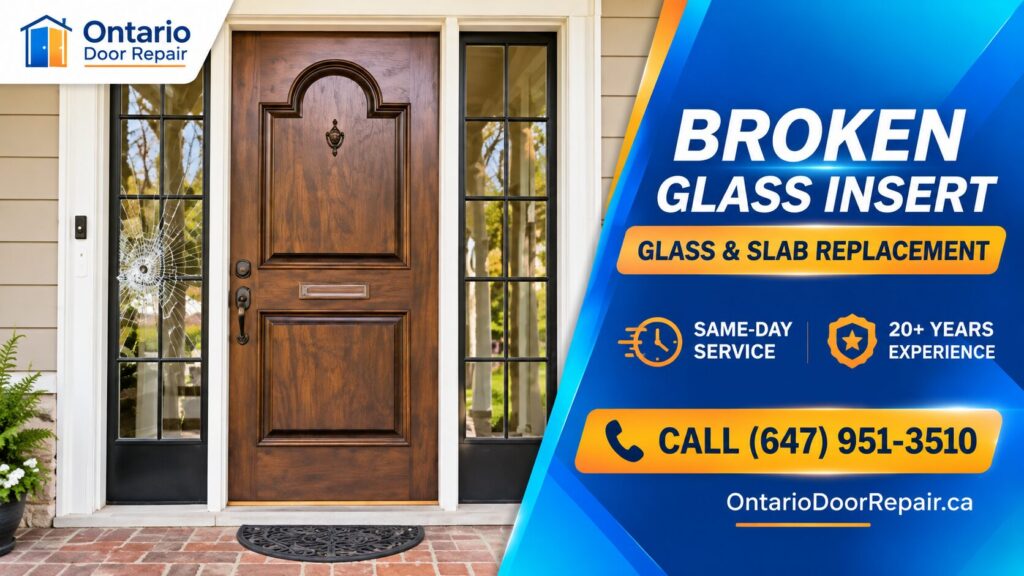
Glass insert damaged beyond repair
The frame of a glass insert is broken along with the glass.
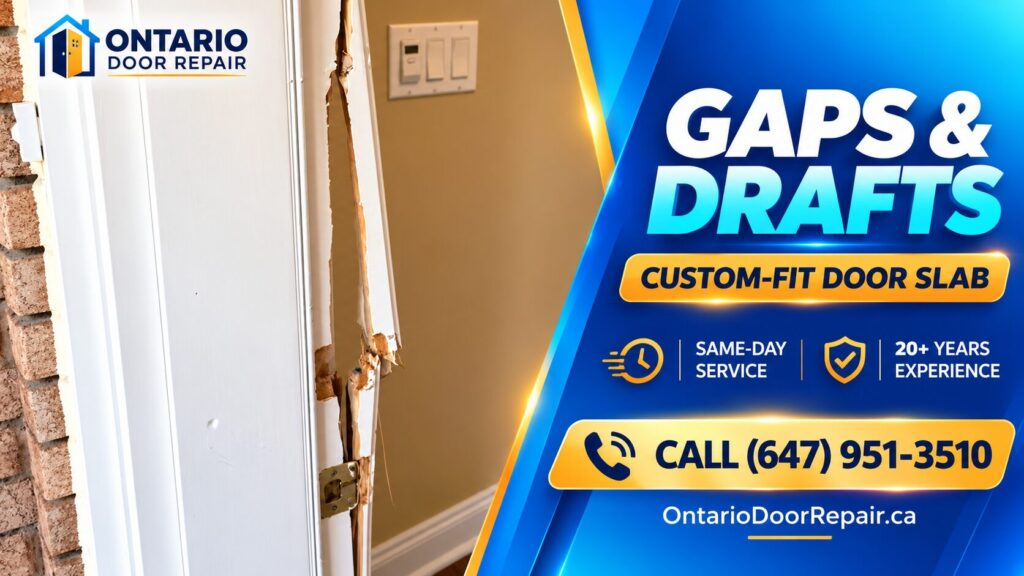
Door cut badly in the past
Someone trimmed the door too much, and now there are gaps and drafts.
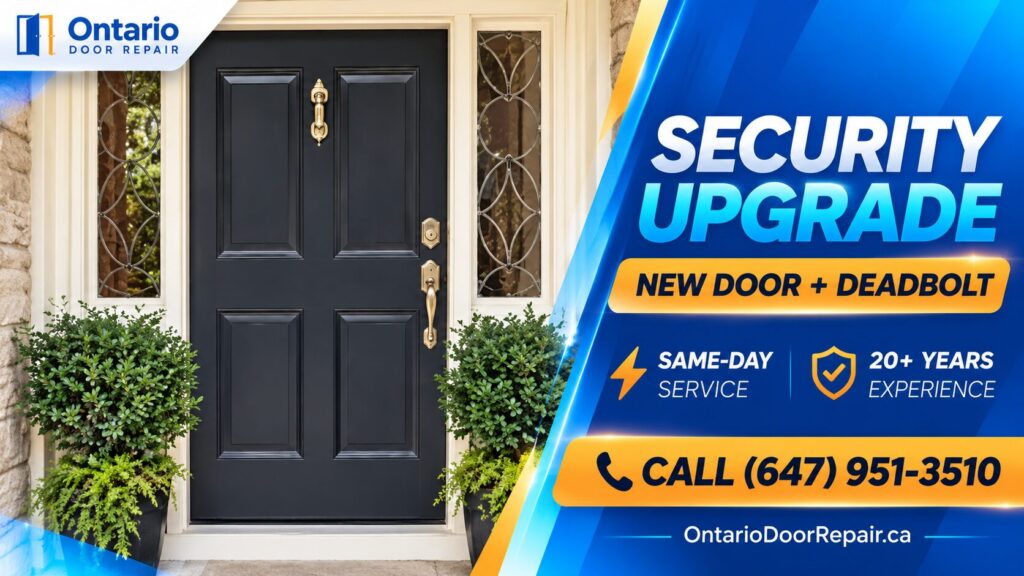
Upgrading security or style
The frame is fine, but you want a stronger or better-looking door.
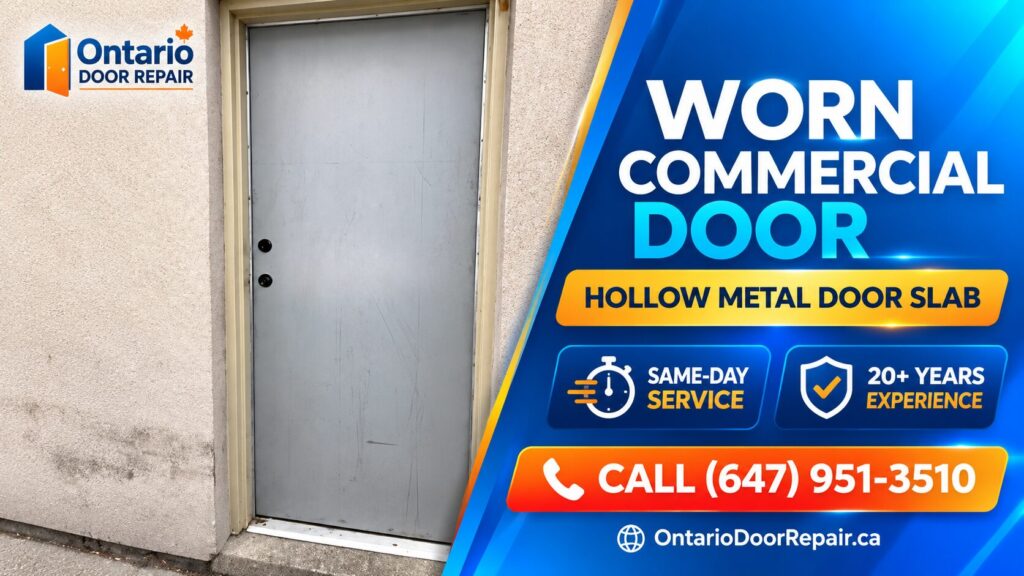
Commercial door worn out
A service or back door is beaten up, but the metal frame is solid.
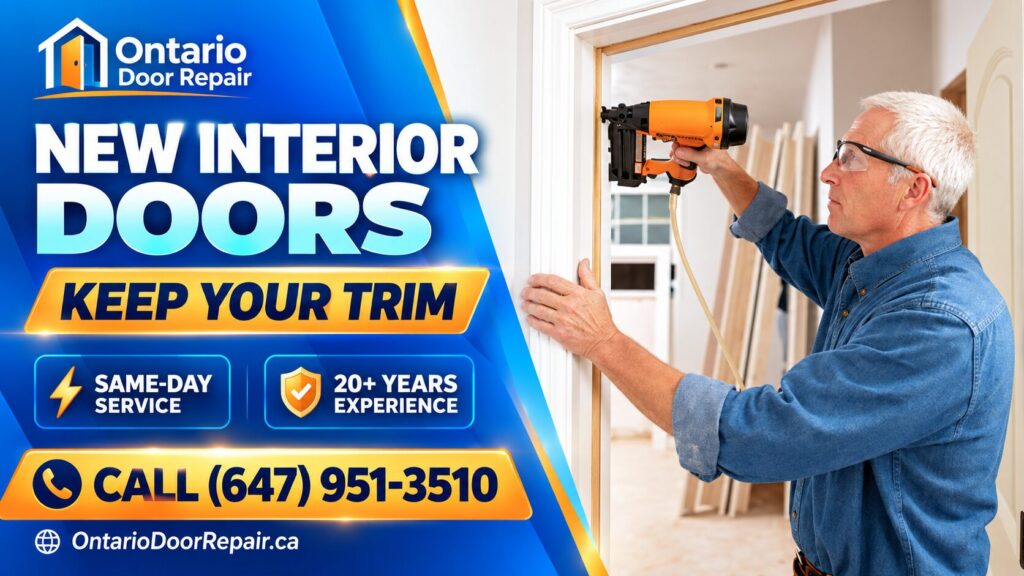
Interior doors mismatched
You want new interior doors but not new trim everywhere.
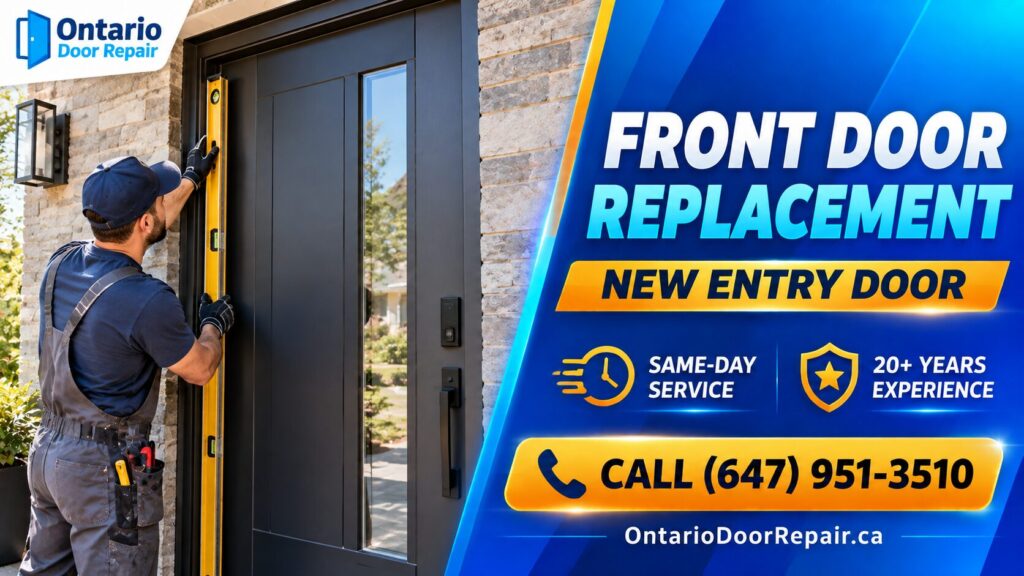
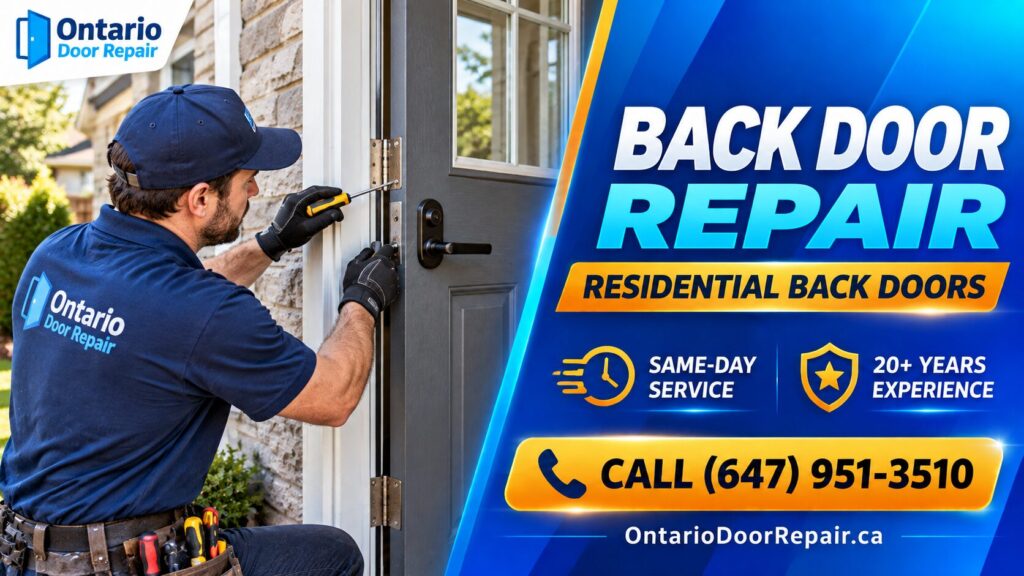
Front and Back Door Replacement in Toronto
A new slab fixes most tired doors. When the frame or the whole unit is gone, we replace it, front or back.
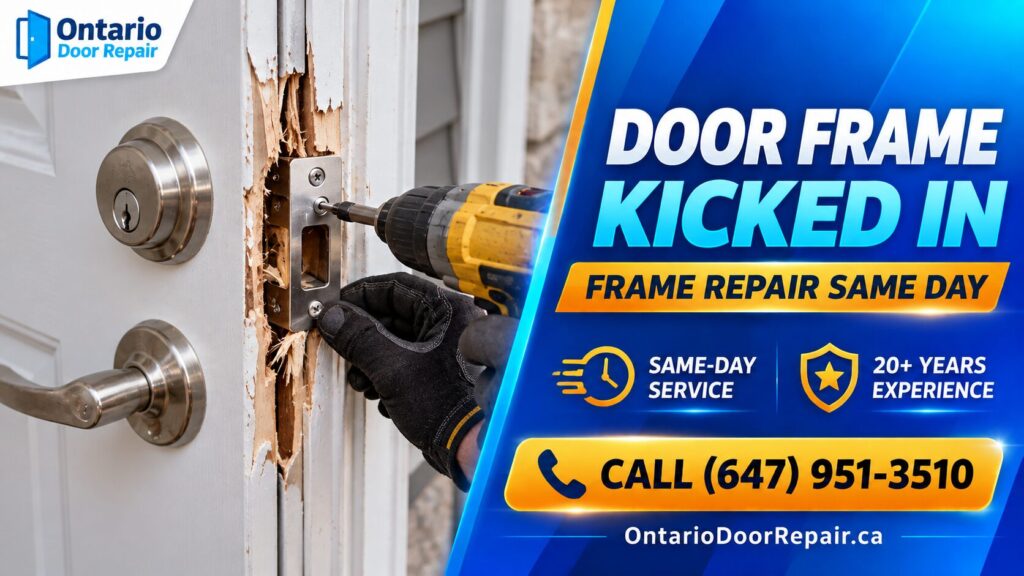
Door kicked in or broken?
We secure the opening the same day and measure for a new slab. Available 24/7 across Toronto and the GTA.
Slab vs. Pre-Hung Replacement
The frame decides which one you need.
A slab is enough when
- The frame is solid, dry and square
- Hinge and strike areas are sound
- The opening is standard or can be matched
- You want to keep casing and paint
- Only the door is damaged or warped
- The existing hinges line up well
Go pre-hung when
- The frame is rotten or split through
- The opening is badly out of square
- The sill is rotted or leaking
- You're changing the door size or swing
- Water damage has reached the wall
- The frame was damaged in a break-in beyond repair
We check the frame before recommending anything. If it needs work but can be saved, we combine a slab with an exterior frame repair. If it can't, we'll tell you and quote a full front door replacement instead.
How a Slab Replacement Is Done
The steps from first visit to finished door.
1. Assess the frame
We check the jamb, hinges, strike and sill to confirm a slab will work.
2. Measure precisely
Height, width, thickness, hinge positions and lock backset, recorded for the new slab.
3. Choose the door
Steel, fiberglass, wood or hollow metal, with or without glass, to suit the opening.
4. Secure if needed
If the old door can't close, we secure the opening until the new slab is ready.
5. Fit and hang
The slab is trimmed, mortised and drilled to match the frame, then hung and adjusted.
6. Hardware and seal
Lockset, deadbolt and weatherstripping fitted, and the door tested for a tight, even close.
Choosing the Right Slab
Door material matters for security, insulation and upkeep.
Steel
Strong, secure and affordable. The most common choice for front and side doors in Toronto. Steel slabs dent under hard impact but resist forced entry well, especially with a reinforced strike.
Fiberglass
Resists denting and doesn't rust or swell. A good choice for entrances exposed to weather.
Wood
The traditional look many older Toronto homes need. Solid wood slabs need sealing on all edges, including the top and bottom, to stop them swelling. See wood door repair.
Hollow metal (commercial)
The standard for back doors, service doors and stairwells in commercial buildings. Fire-rated openings must be replaced with a door of the matching rating. See fire door inspection in Ontario.
Measuring for a Door Slab: What Actually Matters
A slab only works if it matches the opening and the hardware positions. These are the measurements we take.
Height, width and thickness
Standard exterior doors in Ontario are usually 80 inches tall and 32, 34 or 36 inches wide, with 1-3/4 inch thickness. Many older Toronto homes don't follow those numbers. Houses built before the 1960s often have narrower or shorter openings, and doors that have been trimmed several times over the years. We measure the opening, not the old door, because the old door may have been cut wrong.
Hinge positions
The new slab has to take hinges in the exact spots where the frame's hinge mortises already are. We record the distance from the top of the frame to each hinge, the hinge size and the corner radius, and cut the new door to match. Get this wrong and the door hangs crooked no matter how you adjust it.
Lock and strike
The backset (distance from the door edge to the centre of the lock) and the height of the latch and deadbolt must line up with the strike plates already in the frame. If you're upgrading security at the same time, we can fit a longer, reinforced strike. See front door security upgrades.
Swing and handing
Which way the door opens, and which side the hinges are on, decides how the slab is prepared. It sounds obvious, but ordering the wrong hand is one of the most common DIY mistakes.
Gaps and clearances
A well-hung door has an even gap of about 1/8 inch at the top and sides, and clears the sill or floor without dragging. Those gaps are what let the door close smoothly and let the weatherstripping seal properly.
Common Mistakes With Slab Replacements
Why some slab jobs go wrong, and how we avoid it.
- Ignoring a frame that's out of square. A perfect new slab won't close properly in a racked frame. We check the frame first.
- Buying a slab by the old door's size. The old door may have been cut. Measure the opening.
- Skipping edge sealing on wood slabs. Unsealed top and bottom edges swell and warp within a season.
- Reusing worn hinges. Old, loose hinges make a new door sag. We replace them when they're worn.
- Forgetting the strike. If the latch doesn't meet the strike, the new door won't lock. See door won't latch.
- Replacing a fire-rated door with an unrated slab. Fire-rated openings must keep their rating. See fire-rated door code requirements.
Related Door Services
Services our customers usually combine with a new door.
Door frame repair
Split and damaged jambs repaired so the new door holds.
Front door repair
Doors that can be saved with a repair.
Break-in repairs
Doors, frames and locks after a forced entry.
Lock change
New locks for the new door.
Weatherstripping
Seal the new door against drafts.
Steel door repair
Dents, rust and delaminating skins.
What Affects the Cost
We quote after measuring. These are the main factors.
- Door material. Steel, fiberglass, wood and hollow metal are priced differently.
- Glass. Slabs with glass inserts or sidelights cost more.
- Standard or custom size. Older Toronto homes often need custom sizes.
- Frame repairs. Minor frame work is often needed alongside the slab.
- Hardware. Reusing your lockset or fitting new locks.
- Finishing. Primed slabs vs. factory-finished doors.
See our residential door repair cost guide and commercial door repair cost guide for general pricing.
Door Slab Replacement FAQ
Questions homeowners ask us.
Can I keep my door frame and just replace the door?
Often, yes. If the frame is square and solid, a new door slab can be fitted and hung in the existing frame.
Is a slab cheaper than a full door replacement?
Usually, because there is no frame removal, trim work or patching. The final price depends on the door you choose.
Will the new door match my existing hinges and lock?
We cut the hinge mortises and lock holes to match your frame, so the existing strike and hinge positions line up.
My door was kicked in. Do I need a whole new door and frame?
Not always. If the frame can be repaired, a new slab and a frame repair usually cost less than a full unit.
How long does it take?
Measuring is one visit. Once the slab is ready, hanging it is usually done in a single visit.
Can you secure my door until the new one arrives?
Yes. We board up or secure the opening the same day.
Do you replace commercial door slabs?
Yes. Hollow metal and commercial doors can often be replaced in existing frames.
Can I send photos for a quote?
Yes. Send photos or a short video on WhatsApp at 647-866-0956.
More Guides
Related help from our team.
Before replacing a door, it's worth reading door won't close or lock, hinge pulled out of the frame, door repair after a break-in and common door problems in the GTA. Other services: residential door repair, emergency door repair, screen and storm doors, multi-point locks, closet and bi-fold doors and storefront entry doors.
Door Replacement Across the GTA
Local door pages near you.
Replace the door, keep the frame
Slabs measured, cut and hung in your existing frame by licensed, insured technicians across Toronto and the GTA.
📞 Call 647-951-3510 Request a Free Estimate