Access control hardware is the part of a commercial door that everyone relies on and nobody thinks about until the morning it stops working. A magnetic lock that will not release traps people inside. An electric strike that buzzes but never unlocks leaves staff propping the door open with a fire extinguisher, which is exactly the situation you were trying to prevent.
This guide walks through how maglocks and electric strikes actually work, the failures we see most often on Toronto commercial doors, what you can safely check yourself, and where the line sits for calling a technician. It is written for property managers, facility staff and business owners, not electricians.
Maglock vs Electric Strike: They Are Not Interchangeable
People use these terms as if they were the same product. They are opposites in almost every respect, and knowing which one you have determines everything about how you troubleshoot it.
Magnetic Lock (Maglock)
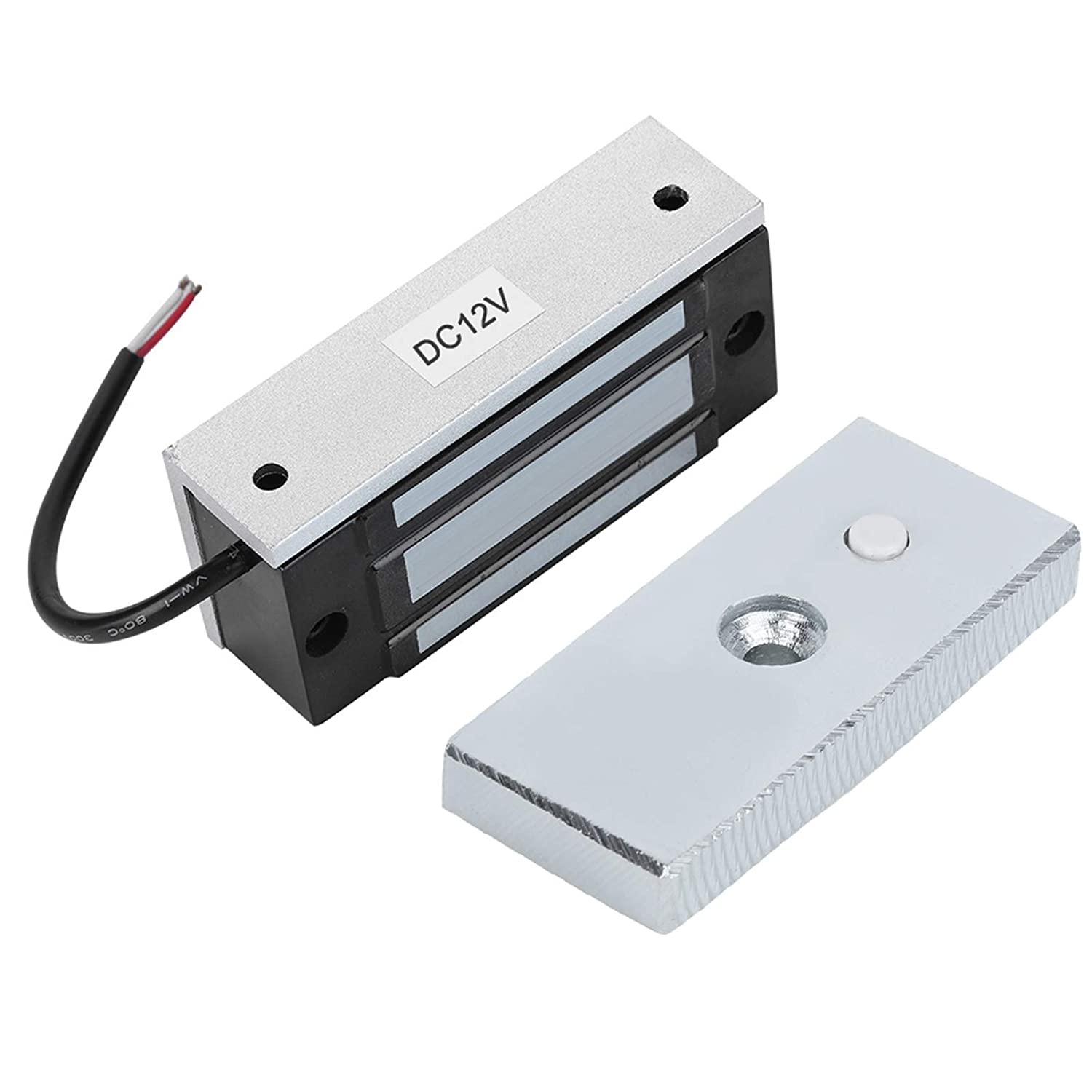
An electromagnet mounted on the frame and a steel armature plate on the door. Power the magnet and it grips, typically with 600 or 1,200 pounds of holding force. Cut the power and it releases instantly. Critically, a maglock is fail-safe: no power means unlocked. That is why it is legal on egress doors, and why a power outage unlocks your building.
Electric Strike
Replaces the fixed strike plate in the frame with one that has a hinged keeper. The mechanical latch on the door never changes. When energised, the keeper pivots and lets the latch swing free. Most commercial strikes are fail-secure: no power means still locked, and you get in with a key. The door remains exitable from inside because the lever always retracts the latch mechanically.
The practical consequence: if your door stays locked during a power failure, you have a fail-secure strike. If it unlocks, you have a maglock or a fail-safe strike. That single observation narrows most troubleshooting immediately.
The Failures We See Most Often
Door Will Not Unlock When the Button Is Pressed
Work backwards along the signal path: button, controller, power supply, lock. Nine times out of ten it is either the request-to-exit button itself, which is a mechanical part that wears out, or a loose connection in the door loop. Listen carefully. A distinct click or buzz at the strike means the signal arrived and the problem is mechanical. Total silence means the signal never got there.
Door Will Not Latch or Stay Locked
On a strike, this is almost always alignment rather than electronics. The latch has to seat fully inside the keeper. Door sag, a warped frame or a worn closer that no longer pulls the door home will all cause the latch to sit proud. Fix the alignment and the electronics usually start behaving. This is where door frame repair or hinge replacement solves what looks like an access control fault.
Maglock Holds Weakly
A maglock only develops full holding force when the magnet and armature meet flat, with clean faces and no gap. Causes of weak hold, in order of likelihood: a bent or loose armature plate, debris or paint on the mating faces, a sagging door creating a gap, or low voltage at the lock. Never shim a maglock to force contact. Correct the door alignment instead.
Buzzing, Humming or Chattering
Usually an AC power supply feeding a device that wants filtered DC, or a supply that is undersized for the current draw. Chattering wears the hardware quickly and is worth fixing promptly rather than living with.
Lock Works Intermittently
The classic cause is a broken conductor inside the door loop, the flexible cable that carries power from frame to door. It flexes thousands of times a year and eventually a strand fractures. It works when the door sits one way and fails when it moves. Door loops are consumables. Expect to replace them.
Everything Failed at Once
Check the power supply and its battery backup first. Sealed lead-acid batteries in access control panels have a limited service life, and when they fail the whole system can behave erratically before it dies outright.
Safe Checks You Can Do Yourself
- Confirm power. Most panels and supplies have an LED. No light means start there, not at the door.
- Test the manual release. Every maglock installation must have a way out. Press the exit button and the emergency release and confirm both drop the magnet.
- Inspect the mating faces. Wipe the magnet and armature clean. Paint, grit or a sticker will cost you holding force.
- Check the armature is snug but slightly floating. It is meant to be mounted with a shoulder bolt and rubber washer so it can self-align. Bolted rigid, it will never seat properly.
- Watch the door close. If it does not close fully and firmly on its own, the closer is your real problem. See our guide to door closers.
- Look at the door loop. Visible kinks, pinch marks or a cable pulled taut when the door opens all point to a failing loop.
What to leave alone: anything behind the access control panel cover, fire alarm interface wiring, and voltage adjustments. Egress hardware is life-safety equipment and miswiring it can trap people in a building.

Code and Egress: The Part That Gets Buildings in Trouble
A magnetic lock on a door in an exit path is only acceptable when it releases reliably under the conditions the code requires, including on fire alarm activation and on loss of power. The releasing devices have to be obvious and reachable, not hidden behind a counter or behind a sign.
The violations we find repeatedly on Toronto sites are the mundane ones: an exit button that has been disconnected because it kept getting pressed, a fire alarm interface that was never actually connected, and a maglock fitted to a fire-rated door where it interferes with self-latching. If your door is fire-rated, read our Ontario fire-rated door code guide before changing any hardware, and see fire exit door service.
Rule of thumb: if you cannot demonstrate that the door unlocks on alarm and on power loss, treat it as non-compliant until a technician verifies it.
Magnetic Lock and Electric Strike Costs in Toronto (2026)
| Service | Typical Range | Notes |
|---|---|---|
| Diagnostic service call | $120 – $200 | Business hours, single opening |
| Electric strike replacement | $350 – $750 | Depends on frame prep required |
| Maglock replacement (600 lb) | $400 – $800 | Parts and labour |
| Maglock replacement (1,200 lb) | $600 – $1,100 | Heavier doors and exterior openings |
| Door loop replacement | $180 – $400 | Common wear item |
| Power supply / battery replacement | $250 – $600 | Includes backup battery |
| Exit button or REX sensor | $150 – $350 | Per device |
| Alignment and hardware tune-up | $150 – $300 | Often resolves the fault outright |
| After-hours / emergency | Premium applies | 24/7 response available |
These are planning ranges for the GTA, not quotes. Frame condition, door type and access all move the number. For a firm price, request a free estimate. Broader budgeting is covered in our commercial door repair cost guide.
Why Toronto Winters Break Access Control
Two seasonal effects dominate. Condensation forms on a cold steel armature plate in a warm doorway and corrodes the mating face, which quietly reduces holding force over a couple of winters. And thermal movement shifts frames a few millimetres, which is more than enough to stop a latch seating in an electric strike.
Both problems present as “the lock is failing” when the hardware is fine. The wider seasonal pattern is covered in how Toronto weather affects doors and common door problems in the GTA.
Preventive Maintenance Schedule
- Monthly: Test every exit button and emergency release. Confirm the door secures after each test.
- Quarterly: Clean magnet and armature faces. Check armature bolts. Inspect the door loop for wear.
- Twice yearly: Verify latch engagement on strikes and re-time the closer for the season.
- Annually: Load-test the backup battery, verify fire alarm release, and inspect frame alignment.
- Never: Prop a maglock door open against the magnet, or disable an exit device because it is inconvenient.
Scheduled service costs far less than emergency callouts. We make the case in why regular commercial door maintenance matters, and the early warnings are in 10 signs your door needs immediate repair.

Which Hardware Suits Which Door
Aluminum Storefront Doors
Narrow stiles limit what fits. Electric strikes matched to the lock body, or a maglock on the header, are the usual answers. See aluminum and glass doors and storefront entry doors.
Hollow Metal and Steel Doors
The most forgiving. Frames take strike prep well and hold fasteners securely. More on steel door repair.
Wood Doors
Fine for interior openings, but the frame needs reinforcement so the strike does not work loose over time. See wood door repair.
Automatic Operators
Access control has to be sequenced with the operator so the lock releases before the door is driven. See automatic door opener maintenance.
Frequently Asked Questions
Does a magnetic lock unlock in a power outage?
Yes. Maglocks are fail-safe by design, so no power means unlocked. Many installations include a backup battery that keeps them powered for a period, which is why you may not see immediate release.
My electric strike buzzes but the door will not open. Why?
The signal is arriving, so the fault is mechanical. Usually the latch is binding under pressure from a misaligned door or a stiff closer. Try pulling the door slightly toward the frame while pressing the button; if it opens, alignment is your problem.
Why is my maglock weaker than it used to be?
Most often a gap between magnet and armature caused by door sag or a loose armature plate, or corrosion on the mating faces. Clean the faces and correct the alignment before considering replacement.
Can I install a maglock on any door?
No. Doors in an exit path must meet egress requirements, and fire-rated doors have to keep self-latching. Get the opening assessed before ordering hardware.
How long does this hardware last?
Maglocks and strikes commonly run many years. Door loops, exit buttons and backup batteries are wear items and will need replacing well before the locks do.
Do you provide emergency service?
Yes. If a door will not secure or will not release, treat it as urgent. We offer emergency door repair and 24/7 service across the GTA, including break-in repairs.
Areas We Serve
We install, troubleshoot and repair magnetic locks and electric strikes throughout Toronto and the GTA, including Etobicoke, North York, Scarborough, Vaughan, Markham, Richmond Hill, Mississauga, Oakville and Hamilton.
Access Control Down? We Can Be There Today.
Ontario Door Repair has served Toronto and the GTA for over 20 years, with 120+ five-star reviews, licensed and insured technicians, and a warranty on every job. Same-day and 24/7 emergency service available.
📞 Call 647-951-3510 | 💬 WhatsApp Us
Request a free estimate · Read client reviews · Browse our FAQ
Related services: magnetic lock repair and installation, electric strike repair and installation, commercial door repair and residential door repair. Also useful: sticking or jammed doors and storefront door and hinge problems.